Seagulls are often associated with coastal areas, ports and beaches. However, in recent years they have also become a common problem in inland areas, especially when they find food in landfills, waste management plants or rubbish dumps and resting areas in reservoirs, lakes, canals or large bodies of water.
This combination can create important hygiene, maintenance and public health issues. The birds feed in landfills and then move to nearby bodies of water to rest or spend the night, increasing the risk of droppings accumulating in sensitive areas.
In this article, we explain why large concentrations of seagulls appear in landfills and reservoirs, what risks they may create and what solutions can be applied to reduce their presence effectively and without harming the birds.
Why Seagulls Appear in Inland Areas
The presence of seagulls in inland areas often increases during the colder months, especially in autumn and winter. One of the main reasons is that many seagulls have found in landfills an easy, abundant and constant source of food.
When a landfill, waste management plant or rubbish dump gives birds access to organic waste, seagulls may gather in large groups. They then often move to nearby areas where they find water, open space and quiet places to rest, such as reservoirs, dams, canals, ponds or lakes.
Some of the seagull species that may be observed in inland areas include the black-headed gull and the lesser black-backed gull, although populations may vary depending on the area, the season and the available food sources.
What Problems Do Seagulls Cause in Landfills and Reservoirs?
Large concentrations of seagulls can cause problems in nearby towns and urban areas: noise, dirt, droppings and cleaning issues. In some cases, especially during breeding periods or when the birds feel threatened, they may also show aggressive behaviour.
The most important issue, however, is often related to hygiene and public health. When seagulls feed in landfills and then gather in reservoirs or water supply areas, their droppings can contribute to environmental contamination and increase microbiological risk.
For this reason, managers of waste management plants, landfills, reservoirs or water supply facilities should consider bird presence as part of their prevention, maintenance and environmental control strategy.
Why Acting on Just One Area May Not Be Enough
In many cases, seagulls do not use a single location. They may feed in a landfill during the day, move to a reservoir to rest, and return to the feeding point the next day.
Before installing any control system, it is therefore advisable to study:
- Where the seagulls are feeding.
- Where they rest or spend the night.
- What routes they follow between the landfill and nearby water areas.
- At what times the highest activity is concentrated.
- Which areas are most sensitive due to health, safety or maintenance risks.
This analysis makes it possible to design a more effective solution, especially when the problem affects large areas or sensitive public facilities.
Solutions to Control Seagulls in Landfills and Reservoirs
Seagull control in landfills, reservoirs and waste management plants should be approached as a combination of measures. It is not only about installing a device, but about reducing the attractiveness of the environment and making it harder for the birds to perceive the area as a safe place to feed or rest.
1. Reduce Access to Food
In landfills and waste management plants, one of the most important measures is to limit, whenever possible, birds’ access to organic waste. The easier it is for seagulls to feed on site, the more likely they are to return repeatedly.
2. Keep Sensitive Areas Clean
Cleaning and maintenance help reduce odours, remains and signs that may attract birds. They also make it easier to detect areas where droppings, feathers or organic waste accumulate and to act before the problem increases.
3. Use Sound-Based Deterrents for Large Areas
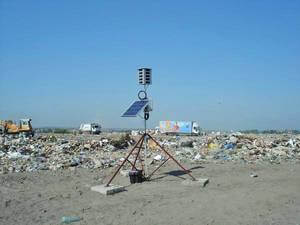
Sound-based deterrents can be suitable for landfills, reservoirs and large open areas when they are correctly installed and configured. These devices play sounds that seagulls interpret as danger signals, such as distress calls from their own species and sounds from natural predators.
The aim is not to harm the birds, but to make them perceive the area as unsafe and move to other places where they do not create health, cleaning or maintenance problems.
Which Seagull Deterrent Should Be Chosen According to the Area?
The choice of equipment depends on the area to be protected, bird pressure, available installation points, sound direction and the characteristics of the environment. Protecting a small access point is not the same as acting on a landfill, a reservoir or a large waste management facility.
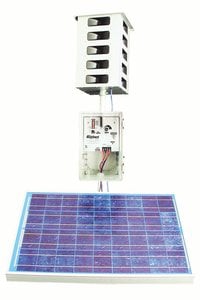
- For small areas or specific points, the BirdGard Pro can be considered, with coverage of up to 0.6 hectares.
- For large areas, landfills or open spaces, the BirdGard Super Pro Amp may be more suitable, as it is designed to cover up to 12 hectares.
- In some cases, the MultiSound BS-20L sound bird deterrent may also be assessed, depending on the type of facility and the level of bird pressure.
To review all available solutions, you can visit the Repel Seagulls category in our online store.
When Should Several Measures Be Combined?
When seagull problems are linked to landfills and reservoirs, combining several measures is often more effective than acting on just one point. If birds feed in one area and rest in another, coordinated action may be needed in different zones.
Depending on the case, it may be advisable to combine:
- Better management of access to organic waste.
- Cleaning and maintenance of critical areas.
- Sound-based deterrents aimed at concentration areas.
- Visual reinforcement systems in specific points.
- Regular follow-up to adjust schedules, volume and speaker direction.
Related Cases Involving Seagulls in Industrial Areas
The presence of seagulls in landfills and reservoirs can also affect nearby factories, warehouses, industrial estates or logistics centres. These real customer cases show how similar problems have been addressed in industrial facilities:
- Grúas Garro explains how they got rid of seagulls on the roofs of their industrial buildings in Beasáin.
- Case study: how a factory reduced seagull dirt on its rooftops by more than 75%.
- CTM case study: Centro de Transportes de Madrid and the use of BirdGard deterrents to control seagull infestations on warehouse roofs.
More Information on How to Repel Seagulls
If you would like a broader guide on methods, products and recommendations depending on the type of environment, you can read our main article on how to repel seagulls.
If you are responsible for a landfill, waste management plant, reservoir or facility with large concentrations of seagulls, you can contact BirdGard Iberia so that we can study your case and assess the most suitable solution.
Conclusion
Seagulls in landfills and reservoirs are not only a nuisance. When they gather in large numbers, they can create hygiene, maintenance, environmental contamination and public health risks in sensitive areas.
The solution should be approached technically: analysing where the birds feed, where they rest, what routes they follow and which areas require the highest level of protection. In many cases, sound-based deterrents can be part of an effective strategy, especially when combined with good waste management, cleaning and regular monitoring.
In large facilities such as landfills, reservoirs or waste management plants, correctly dimensioning the system is essential to obtain good results.
Frequently Asked Questions About Seagulls in Landfills and Reservoirs
Why are there seagulls in landfills?
Seagulls go to landfills because they find an abundant and easy source of food. Organic waste and urban refuse can attract large concentrations of birds, especially during colder periods or when other food sources are scarce.
Why do seagulls move from landfills to reservoirs?
After feeding in landfills or waste management plants, seagulls may move to reservoirs, lakes, rivers or large bodies of water to rest, drink or spend the night. For this reason, the problem may affect several points in the surrounding area, not just the landfill itself.
Can seagulls contaminate water?
Large concentrations of seagulls can increase the amount of droppings in reservoirs, canals or water supply areas. This may contribute to hygiene problems and increase microbiological risk, which is why their presence should be controlled in sensitive areas.
What risks do large concentrations of seagulls create?
They can create dirt, droppings accumulation, bad odours, facility deterioration, blocked drains, nuisance in nearby towns and health risks in waste management or water storage areas.
What solutions exist to control seagulls in landfills?
Solutions may include better management of access to organic waste, cleaning of critical areas, sound-based deterrents, visual reinforcement systems and regular monitoring. In large areas, the system must be correctly dimensioned.
Which deterrent should be used in large areas?
In large areas such as landfills, reservoirs or waste management plants, high-coverage devices may be necessary. The BirdGard Super Pro Amp is designed to cover up to 12 hectares, while the BirdGard Pro may be more suitable for small areas or specific points.
Should several measures be combined?
Yes. When seagulls feed in one place and rest in another, it is usually advisable to combine management measures, cleaning, sound-based deterrents and visual systems. Coordination between nearby facilities can improve results.
Can the problem be reduced without harming the birds?
Yes. Sound-based and visual deterrents aim to modify bird behaviour so that seagulls perceive an area as unsafe and move elsewhere. The goal is to reduce their presence in sensitive areas without harming them.