A factory with a roof area of more than 75,000 m² was facing the daily presence of thousands of seagulls. The birds were using the rooftops as resting and feeding areas, generating more than one tonne of waste and dirt per year.
After installing BirdGard sound-based seagull deterrents, the amount of dirt removed during maintenance cleaning was reduced by more than 75%. The seagulls relocated to other areas outside the factory and stopped being a problem for the facility.
For confidentiality reasons, we do not mention the company name. However, we can share the main details of the case, the characteristics of the installation, the solution installed and the results achieved.
Case Summary
- Customer: industrial factory.
- Type of facility: factory with a large industrial roof and two adjacent warehouses.
- Main protected area: more than 75,000 m².
- Problem: thousands of seagulls continuously perching on the rooftops.
- Attraction factors: landfill around 10 km away, river around 500 metres away, white roof surface and morning dew accumulation.
- Damage and risks: more than one tonne of waste per year, dirt, droppings, bones, stones, risk of blocked drains, roof deterioration and skylight damage.
- Solution installed: one BirdGard Super Pro Amp #20 and two BirdGard Pro Plus #20 units with solar panels.
- Result: more than 75% reduction in bird waste and dirt removed during maintenance cleaning.
- Status: devices operating continuously since 2019.
The Problem: Thousands of Seagulls on an Industrial Roof
Before the installation of the BirdGard deterrents, the factory roof and two adjacent warehouses were constantly invaded by flocks of thousands of seagulls.
The main roof covered more than 75,000 m². Due to its size, white colour and the accumulation of water in some areas, it had become a very attractive resting point for the birds.
Why Seagulls Were Gathering on This Factory
The presence of thousands of seagulls on the factory rooftops was explained by several combined factors:
- The factory is located about 10 kilometres from a landfill. Seagulls used this landfill as a food source, which encouraged their presence in the area.
- The factory is about 500 metres from a river, in a mountainous, cold and humid area. Morning dew formed puddles on the plastic-coated roof, attracting seagulls to drink and cool down.
- The roof, which covers more than 75,000 m², was mostly painted white. This made it visually stand out and become more attractive to seagulls.
What Damage Did the Seagulls Cause on the Roof?
The seagulls were not only perching on the roof. They were using the rooftops as resting and feeding areas. They collected food scraps from the landfill and brought them to the factory to eat them there.
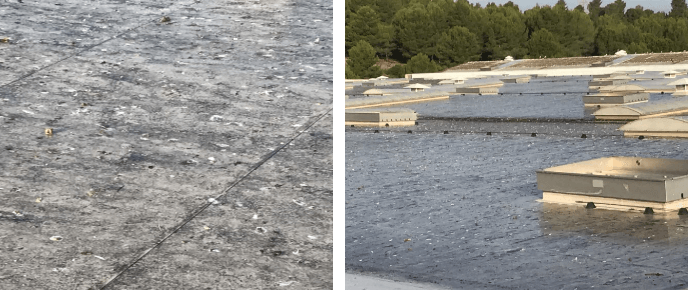
As part of the factory’s Maintenance and Risk Management Plan, two annual roof cleanings were carried out because of the excessive dirt generated by the birds. During these cleanings, more than one tonne of seagull waste was removed every year.
The waste did not only consist of droppings or nest debris. It also included skeletons from the landfill, bones, stones eaten and later regurgitated by the birds, and other organic remains.
These cleanings were necessary to prevent health risks, blocked drains, roof deterioration and damage to the skylights that allow natural light into the factory.
These photos show the condition of the rooftops before the installation of the BirdGard seagull deterrents:
The Customer’s Question: How to Keep Seagulls Away from the Roof
As part of its Maintenance and Risk Management Plan, in 2019 the factory decided to look for a serious solution to protect its rooftops:
“What can be done to repel seagulls? What solution can we implement to prevent birds from resting on our roof?
We researched different seagull protection methods online and, in October 2019, we contacted BirdGard Iberia.
After a more thorough market analysis, we trusted the solution recommended by BirdGard Iberia. At the end of 2019, we implemented the project to protect our facilities from seagulls. We launched this project with the aim of improving the quality of our installations.”
The Solution Installed: BirdGard Super Pro Amp #20 and BirdGard Pro Plus #20
On an industrial roof of more than 75,000 m², a small device is not enough. The solution had to be dimensioned according to the surface area, bird pressure and available installation points.
In 2019, the following equipment was installed:
- One BirdGard Super Pro Amp #20 in the centre of the factory’s main roof. This model is designed for large areas and provides coverage of up to 12 hectares. You can find all the technical information on the BirdGard Super Pro Amp product page.
- Two BirdGard Pro Plus #20 units to protect each of the two adjacent warehouses. You can check the equipment specifications on the BirdGard Pro Plus product page.
- Since there were no power connection points on the roofs of these two warehouses, the BirdGard Pro Plus units were powered by 12V batteries, kept charged by BirdGard 25W solar panels.
The BirdGard Super Pro Amp consists of a central unit and a tower with 20 speakers that spread anti-seagull sounds in all directions. This configuration makes it possible to cover large industrial areas where seagulls are distributed across different parts of the roof.
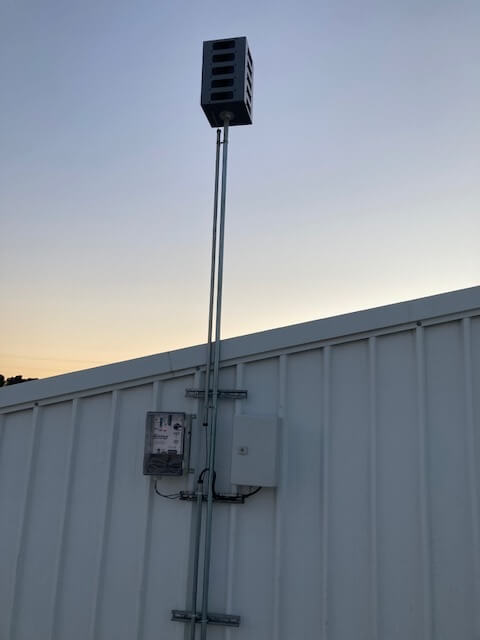
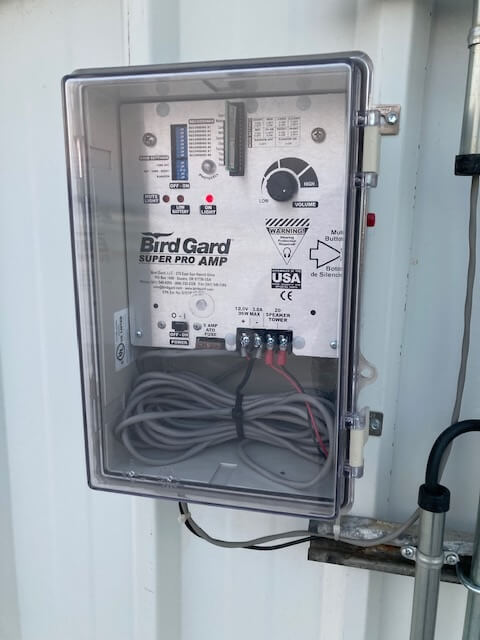
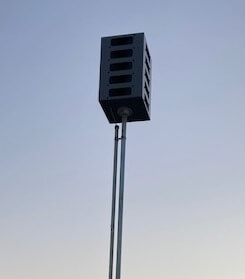
The devices emit natural bird sounds that seagulls interpret as danger signals: distress calls from their own species and calls from natural predators. The goal is not to harm the birds, but to make them perceive the roof as an unsafe area and move elsewhere.
In this video, you can see the BirdGard Super Pro Amp in operation:
Results: More Than 75% Reduction in Dirt and Bird Waste
The results have been very satisfactory. The BirdGard seagull deterrents have been operating continuously since their installation in 2019. The factory has been successfully protected from the presence of seagulls.
As part of the Maintenance Plan, two annual roof cleanings are still carried out, but now only as a preventive measure to check the condition of the roof, its drainage system and the skylights that provide natural light inside the factory.
The amount of dirt and bird waste removed after these cleanings has been reduced by more than 75%. In fact, the company is considering reducing the number of annual roof cleanings to just one.
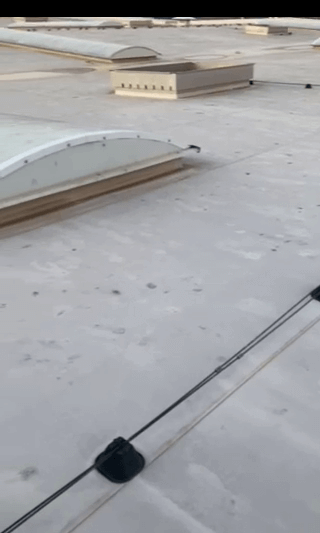
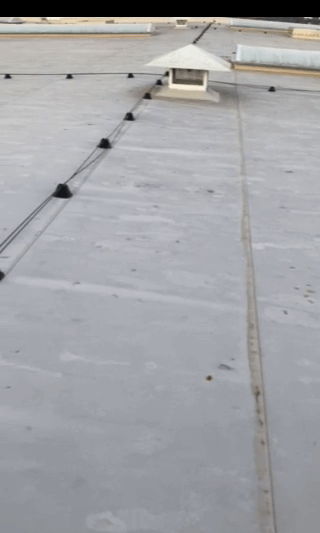
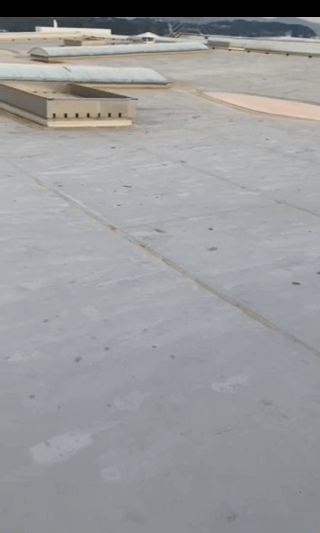
These photos show the condition of the rooftops after the installation of the BirdGard deterrents:
What This Case Shows About Seagulls on Industrial Roofs
This case provides several useful lessons for other factories, warehouses or industrial facilities facing similar problems:
- Seagulls can use roofs as resting and feeding areas. The problem is not always related to nesting.
- Nearby landfills can attract large flocks of seagulls. Birds may then move to nearby industrial roofs to rest or consume food remains.
- White, humid or water-retaining roofs may be more attractive. In this case, morning dew created puddles that encouraged the presence of the birds.
- The problem can affect maintenance and facility safety. Waste accumulation can block drains, deteriorate the roof and create hygiene risks.
- For very large surfaces, the solution must be correctly dimensioned. A 75,000 m² roof requires high-coverage devices and a carefully planned installation.
- Cleaning and maintenance remain important. Even when bird presence is greatly reduced, it is advisable to periodically inspect the roof, drains and skylights.
Related Products and Solutions
For similar problems on roofs, industrial covers, warehouses or factories, you can visit the Repel Seagulls category in our online store.
You can also read our main guide on how to repel seagulls, where we explain the most suitable methods depending on the environment and type of problem.
If you would like to read other real customer case studies:
- Grúas Garro explains how they got rid of seagulls using BirdGard sound deterrents.
- CTM case study: Centro de Transportes de Madrid and the use of BirdGard Pro Plus #20 to control seagull infestations on warehouse roofs.
- For more information about the origin of the problem in areas near landfills and reservoirs, we recommend the article Seagulls in landfills and reservoirs: a public health issue.
Conclusion: A Real Case Study on Seagull Control on Industrial Roofs
This case shows that a massive presence of seagulls on industrial roofs can cause serious maintenance, hygiene, material deterioration and recurring cost problems. In this factory, the birds generated more than one tonne of waste per year and forced the company to carry out regular roof cleaning.
The installation of one BirdGard Super Pro Amp #20 on the main roof and two BirdGard Pro Plus #20 units on adjacent warehouses reduced dirt by more than 75% and helped protect a large industrial surface.
If your company has a similar problem with seagulls on roofs, warehouses or factories, you can contact BirdGard Iberia. We will help you assess the most suitable solution depending on the surface area, bird pressure, installation points and characteristics of your environment.
Frequently Asked Questions About Seagulls on Industrial Roofs
How can I repel seagulls from rooftops?
To repel seagulls from rooftops, you first need to identify why they are coming to the area: nearby food, water points, resting areas, an attractive roof surface or the presence of nests. On large industrial roofs, sound-based deterrents designed for seagulls can be a suitable solution when they are correctly dimensioned and installed.
Why do seagulls perch on industrial roofs?
Seagulls may use industrial roofs as resting, feeding or lookout areas. If there is a landfill, river, reservoir or food source nearby, and the roof is large, quiet or accumulates water, the facility may become especially attractive to them.
What damage can seagulls cause on a roof?
Seagulls can generate large amounts of droppings, organic waste, bones, stones and remains from other areas. This dirt can block drains, deteriorate the roof, affect skylights, create hygiene risks and increase maintenance costs.
What solution was installed in this case study?
In this case, one BirdGard Super Pro Amp #20 was installed in the centre of the main roof of more than 75,000 m², and two BirdGard Pro Plus #20 units were installed to protect two adjacent warehouses. The warehouse devices were powered by 12V batteries and BirdGard solar panels.
What coverage does the BirdGard Super Pro Amp provide?
The BirdGard Super Pro Amp is designed for large areas and can cover up to 12 hectares. It includes a tower with 20 speakers that spreads sound in all directions, making it suitable for extensive industrial roofs.
Do sound-based deterrents work on large roofs?
They can work well when the equipment is correctly selected, installed and configured. In this case, after installing the BirdGard deterrents, the amount of dirt and bird waste removed during maintenance cleaning was reduced by more than 75%.
What should I do if there are seagull nests on the roof?
If there are nests or chicks, do not act hastily. Seagulls may become aggressive when protecting their young, and specific regulations may apply. In this situation, it is advisable to wait until the chicks can leave the nest and check applicable regulations before installing any system.
Should the roof be cleaned before installing deterrents?
Yes. Whenever possible, we recommend cleaning the area thoroughly before installing deterrents to remove droppings, feathers, nests and bird remains. Creating a cleaner, more neutral environment helps prevent seagulls from continuing to perceive the roof as their own area.