Seagulls are part of the landscape in many coastal areas. Seeing them fly near the sea can be beautiful, but when they start perching regularly on roofs, terraces, swimming pools, boats, ports, factories or industrial areas, they can become a serious problem.
Their droppings dirty surfaces, damage materials, contaminate walkways and pool areas, and can create hygiene and maintenance problems. During the breeding season, seagulls may also become especially aggressive when protecting their nests or chicks.
In this guide, we explain how to repel seagulls, what problems they cause and which solution is most suitable depending on the area you need to protect: roofs, terraces, swimming pools, boats, ports, landfills, reservoirs, factories or residential areas.
Main solutions for repelling seagulls:
- BirdGard and MultiSound bioacoustic deterrents for roofs, factories, warehouses, industrial areas, landfills, reservoirs and large open spaces.
- Eolo Scarecrow Hawk as a visual deterrent to reinforce the effect of sound-based systems.
- StopGull Air to prevent seagulls from perching on boats, ports, pontoons, biminis and marine structures.
- Quiet solutions for terraces, swimming pools, hotels, restaurants and residential areas where sound may not be suitable.
Problems Caused by Seagulls
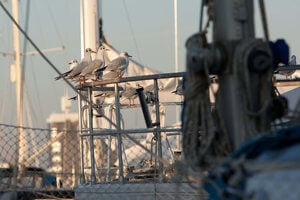
Seagulls are intelligent birds with a strong ability to adapt. Although they are usually associated with the sea, many species have become used to living near ports, cities, hotels, restaurants, landfills, industrial roofs and areas with regular human activity.
The problem usually starts when they find food, shelter or comfortable perching areas. Once they identify a place as safe or useful, they may return repeatedly and become increasingly difficult to move away.
- They disturb people in terraces, hotels and restaurants. In some coastal or tourist areas, seagulls may approach tables to steal food.
- They dirty ports, pontoons and boats. Their droppings stain decks, biminis, handrails, engines and walkways.
- They can damage boats and exposed surfaces. Seagull droppings are acidic and may damage paint, canvas and other materials if not cleaned quickly.
- They create problems around swimming pools. Their droppings can dirty the water and create a poor hygiene impression.
- They perch on roofs, factories and warehouses. When the number of birds is high, the amount of droppings and debris can become a serious maintenance issue.
- They may contaminate sensitive areas. This is especially relevant in landfills, reservoirs and water management facilities.
- They may create risks in airports and heliports. Bird presence near aircraft operations requires specific control measures.
Before choosing a product, it is important to understand the type of problem. Preventing seagulls from perching on a bimini is not the same as reducing the presence of a large flock on a factory roof.
How to Choose the Right Seagull Deterrent
- Roofs, factories, warehouses or industrial areas: if the problem is repeated perching, dirt and large groups of seagulls, a BirdGard or MultiSound bioacoustic deterrent combined with the Eolo Scarecrow Hawk is usually the most suitable option.
- Boats, ports, pontoons and biminis: if seagulls perch on decks, handrails, canvas, masts or raised marine structures, we recommend StopGull Air, StopGull Air XL or specific anti-perching accessories for boats.
- Terraces, hotels, restaurants or swimming pools: if the problem is caused by food, droppings or disturbance to people, visual or anti-perching solutions may be more suitable. In some cases, a sound deterrent with controlled operating hours can also be considered.
- Landfills, reservoirs or large open areas: when there is a high concentration of seagulls, larger-coverage bioacoustic deterrents may be required depending on the surface area and the pressure from the birds.
- Residential areas or communities: if the aim is to reduce the problem without disturbing people with sound, quiet solutions such as visual deterrents, anti-perching devices or mechanical systems should be assessed.
Bioacoustic Seagull Deterrents: BirdGard and MultiSound
When the goal is to reduce the presence of seagulls in a wide area, such as an industrial roof, warehouse, factory, landfill, reservoir or open outdoor space, we usually recommend using bioacoustic bird deterrents with audible sounds.
These devices reproduce natural sounds that seagulls interpret as danger signals, such as distress calls from their own species and predator sounds. The aim is not to harm the birds, but to make them perceive the area as unsafe so that they move away.
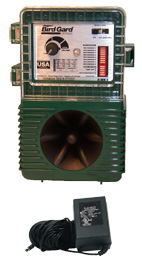
BirdGard Pro #20
The BirdGard Pro #20 is one of the most commonly used models for seagull problems in small or medium-sized areas. It is an audible sound deterrent with a seagull-specific chip and can be suitable for roofs, outdoor areas, industrial facilities and spaces where sound can be used.
On the BirdGard Pro #20 product page, you will find all the product information, technical specifications, price and customer reviews.
MultiSound BS-20L for Pigeons and Seagulls
We now also offer the MultiSound BS-20L, a bird sound repeller available in versions for pigeons and seagulls. It is an interesting option within sound-based bird deterrents, especially when a modern acoustic solution is required for areas with significant bird pressure.
On the MultiSound BS-20L product page, you will find all the product information, technical specifications, price and customer reviews.
The choice between BirdGard Pro, BirdGard Pro Plus, BirdGard Super Pro, BirdGard Super Pro Amp or MultiSound should depend on the surface area to protect, the intensity of the problem, the possibility of positioning the speakers correctly and the presence of neighbours or sound-sensitive areas.
In many cases, an initial reaction from the seagulls can be observed from the first moments of operation. However, long-term effectiveness depends on the bird pressure, the presence of nests, food availability, prior cleaning of the area and correct installation of the equipment.
Eolo Scarecrow Hawk: Visual Deterrent for Seagulls
To improve the result, we usually recommend combining a sound deterrent with a visual deterrent such as the Eolo Scarecrow Hawk.
The combined effect of both devices creates a synergistic effect that improves the effectiveness of the solution. On the one hand, seagulls hear distress and predator sounds. On the other hand, they see a figure that simulates a hawk flying in the area. This combination makes the environment feel less safe for them.
On the Eolo Scarecrow Hawk product page, you will find all the product information, technical specifications, price, videos and customer reviews.
The Scarecrow Hawk consists of a 5 or 7-metre mast and a kite that simulates the shape of a hawk in flight. To maintain its effectiveness over time, it is advisable to change its position periodically and avoid leaving it always in exactly the same place.
For more information about this visual deterrent, you can read our article: Scarecrow Hawk. Discover the keys to its operation.
This video shows the Eolo Scarecrow Hawk being used in an attic area with seagull presence.
Quiet Solutions for Seagulls in Terraces, Pools and Residential Areas
In some areas, using a sound deterrent may not be feasible. This can happen in hotel terraces, restaurants, swimming pools, residential communities or places where the sound could disturb nearby people.
In these cases, visual deterrents or anti-perching systems should be considered. The right option will depend on where the seagulls are perching: railings, cornices, roofs, pool edges, pergolas, antennas, chimneys or elevated structures.
A quiet solution can be very useful to prevent perching in specific points. However, if there are many seagulls or the area is highly attractive to them, it may be necessary to combine several methods.
StopGull Air: Seagull Deterrent for Boats, Ports and Pontoons
On boats, ports and pontoons, the problem is usually different. In many cases, the aim is not to move a flock away from a large surface, but to prevent seagulls from landing on specific points of the boat: bimini, handrail, deck, hard-top, radar, antenna or mast.
For these cases, we recommend StopGull Air, a quiet solution specifically designed to prevent seagulls and other marine birds from perching on boats.
On the StopGull Air product page, you will find all the product information, technical specifications, price, installation videos and customer reviews.
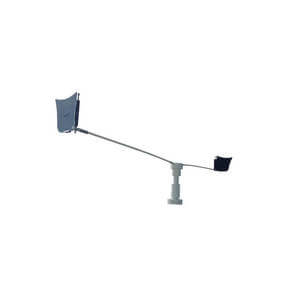
- No batteries or electricity required. Its arms rotate with the breeze.
- Prevents perching in specific areas. It is especially useful on boats, biminis, decks, handrails and elevated marine structures.
- Different models and accessories are available. StopGull Air protects an area of 1.85 metres in diameter, while StopGull Air XL protects an area of 2.34 metres in diameter.
- It is a quiet solution. This makes it suitable for marinas and boats where sound deterrents are not desired.
- Made in Spain. It is a robust product designed for marine use.
You can see all boat accessories in the Bird Deterrents for Boats category.
Do Ultrasonic Devices Work Against Seagulls?
In general, we do not recommend ultrasonic devices as the main solution for seagulls. They may cause some initial discomfort, but from our experience they are usually not effective in the long term because seagulls can get used to the stimulus.
For seagulls, bioacoustic deterrents with audible sounds, visual deterrents and anti-perching systems usually provide better results, depending on the environment and the specific problem.
Is There Any Poison for Seagulls?
We do not recommend or sell poisons for seagulls. Apart from being dangerous and contrary to a respectful approach to animal control, poison can also be a risk for other species, pets, people and the environment.
The correct approach should be based on deterrent methods: modifying the environment, removing food sources, cleaning the area, preventing perching in specific points and using the most suitable deterrent for each case. It is also important to check local regulations, especially if there are nests or chicks.
What to Do Before Installing a Seagull Deterrent
Before installing any deterrent system, we recommend cleaning the area thoroughly to remove seagull remains: droppings, feathers, food waste and abandoned nests, always respecting the applicable regulations.
It is important to create an environment that feels as neutral and clean as possible, so that seagulls do not continue to perceive the area as their own. This can significantly improve the effectiveness of the solution.
Please note that if seagulls are in their breeding season, they may become very aggressive as a way of protecting their chicks. In this case, you may need to wait until the chicks can leave the nest before installing deterrents, and you should always check local regulations before taking action.
Frequently Asked Questions About How to Repel Seagulls
What is the best way to repel seagulls?
It depends on the area. For large surfaces, roofs, factories and industrial areas, we usually recommend BirdGard or MultiSound bioacoustic deterrents combined with the Eolo Scarecrow Hawk. For boats and specific perching points, StopGull Air or an anti-perching solution is usually more suitable.
How can I repel seagulls from a roof?
For roofs and large covers, a combination of a seagull-specific bioacoustic deterrent and a visual deterrent such as the Eolo Scarecrow Hawk usually works well. If the problem is limited to specific perching points, an additional physical or anti-perching solution may be required.
How can I keep seagulls away from a terrace or swimming pool?
In terraces and swimming pools, the first step is to understand why the seagulls are coming: food, waste, resting areas or specific perching points. In many cases, visual or anti-perching solutions are recommended. If the pressure is high and sound is acceptable, a bioacoustic deterrent with controlled operating hours may also be considered.
What can I use to stop seagulls landing on my boat?
For boats, we recommend StopGull Air, StopGull Air XL or their accessories, depending on the installation point. These are quiet solutions that rotate with the wind and prevent seagulls from landing on biminis, handrails, decks and elevated structures.
Do home remedies work against seagulls?
Some home remedies may have a short-term effect, but they are usually not enough when seagulls have already established a regular feeding, resting or perching area. For more stable results, specific deterrent solutions and proper cleaning are usually required.
What should I do if there are seagull nests or chicks?
If there are nests or chicks, do not act hastily. Seagulls may become aggressive when protecting them, and there may be specific regulations in place. In these cases, we recommend waiting until the chicks can leave the nest and checking local regulations before installing any system.
More Information About Seagull Deterrent Solutions
- The article Seagulls in Landfills and Reservoirs – A Public Health Problem explains the health problems caused by seagulls in these environments.
- Bird Control in Solar and Photovoltaic Panels presents solutions for protecting solar installations from birds.
- Customer reference: Garro Cranes explains how they solved their seagull problem with BirdGard bioacoustic deterrents.
- Customer reference: how seagulls were repelled from the roofs of a factory covering more than 75,000 m².
- Customer reference: CTM has been using the BirdGard Pro Plus #20 seagull deterrent since 2018 to control seagull infestations.
Conclusion: The Best Solution Depends on the Area
There is no single solution that works for every seagull problem. For large surfaces, roofs, factories and industrial areas, it is usually best to assess a bioacoustic deterrent such as BirdGard or MultiSound, reinforced with the Eolo Scarecrow Hawk. For boats, ports and pontoons, StopGull Air is usually more suitable because it prevents perching silently.
You can find all our products and solutions for seagulls in the Repel Seagulls category of our online store.
If you are not sure which solution is best for your case, you can contact BirdGard Iberia and we will help you assess the most suitable option depending on the area, surface size, seagull pressure and environmental limitations.
You can place your order through our online store.