Seagulls are usually associated with coastal areas, ports and beaches. However, they are increasingly present in inland cities, where they find the same elements they need to survive: easy food, water and safe resting areas.
Madrid is a good example of this phenomenon. Although it is far from the coast, the city attracts large numbers of seagulls during the colder months. Landfills, food distribution centres, reservoirs, water treatment plants and industrial roofs can all become part of the same daily route for these birds.
In this article, we explain why seagulls appear in inland cities, what problems they can cause, how to control them and what we can learn from the real case of CTM – Madrid Transportation Center, where BirdGard sound deterrents have been used since 2018 to help control seagulls on industrial roofs.
Key Points About Seagulls in Inland Cities
- Seagulls are not only found near the sea. Many inland cities attract them during autumn and winter.
- They look for food and water. Landfills, rubbish dumps, food distribution centres, reservoirs and rivers can all attract seagulls.
- Industrial roofs can become resting or feeding areas. Flat, quiet roofs close to food sources are especially attractive.
- The problem is often seasonal. Seagull numbers usually increase during the colder months.
- The main issues are dirt, droppings, organic waste, blocked gutters, leaks, dampness and hygiene risks.
- The most effective approach is usually a combination of methods, especially in large industrial areas or locations with high bird pressure.
Why Do Seagulls Appear in Inland Cities?
Seagulls are marine birds, but they are also highly adaptable. In inland cities, they can find two essential resources: food and water.
During the colder months, many seagulls from northern Europe migrate south in search of milder temperatures. Some of them do not continue all the way to Africa and instead settle temporarily in inland areas where they find favourable conditions.
Large cities can offer exactly what they need: food from landfills, rubbish dumps or large food distribution centres, and resting areas in reservoirs, lakes, rivers, water treatment plants or flat industrial roofs.
What Do Seagulls Look For in Inland Cities?
In inland environments, seagulls usually follow a simple pattern: they feed in one place and rest in another. This is why the problem often affects several locations at the same time.
- Food sources: landfills, rubbish dumps, food markets and waste areas.
- Water and resting areas: reservoirs, rivers, lakes, canals, water treatment plants and wetlands.
- Safe elevated points: industrial roofs, warehouses, logistics centres and large flat buildings.
This behaviour explains why companies located near landfills, food distribution centres or water areas may suddenly experience seagull problems on their roofs, even when they are far from the coast.
Which Seagull Species Are Common in Inland Cities?
There are many species of gulls worldwide, but in Spain the most commonly observed species include:
- Black-headed Gull Larus ridibundus.
- Lesser Black-backed Gull Larus fuscus.
- Yellow-legged Gull Larus michahellis.
- Herring Gull Larus argentatus.
In Madrid, the Black-headed Gull and the Lesser Black-backed Gull are especially common during the colder months. Other gull species may also be observed, depending on the season and the available food sources.
Where Do Seagulls Feed in Inland Cities?
Seagulls do not only eat fish. They are opportunistic birds and can feed on organic waste, urban refuse and food remains from large distribution centres.
In Madrid, for example, many seagulls find food in areas such as Mercamadrid, Valdemingómez or Pinto. These places can attract large numbers of birds, especially during autumn and winter.
Once they collect food, the birds often move to quieter, safer areas where they can rest or eat. Industrial roofs close to these feeding points can therefore become regular landing, feeding or roosting areas.
Where Do Seagulls Rest or Sleep in Inland Cities?
Seagulls often rest on water: reservoirs, rivers, lakes, wetlands or water treatment plants. Resting on water helps them stay safer from terrestrial predators and allows them to gather in large groups.
However, they may also use industrial roofs, warehouses and flat buildings as resting or roosting areas, especially when these places are quiet, elevated and close to food sources.
Flat roofs with puddles or standing water can be particularly attractive because birds can use them to drink, cool off and rest.
Breeding Season: When Extra Caution Is Needed
Seagulls usually lay two or three eggs per year, often in spring. They tend to return to the same nesting areas and can become very defensive if they feel their eggs or chicks are threatened.
During incubation and until the chicks are able to leave the nest, it is not advisable to act hastily. The birds may become aggressive and any control measure can be ineffective or problematic.
If there are nests, eggs or chicks, the recommended approach is to wait until the chicks can leave the area and to check the applicable regulations before installing any deterrent system.
What Problems Do Seagull Infestations Cause?
Large concentrations of seagulls can create cleaning, maintenance, hygiene and safety problems. These issues are especially important in industrial roofs, logistics centres, food handling facilities, residential communities and sites located close to landfills or large food distribution centres.
The most common problems include:
- Accumulation of droppings on roofs, façades and outdoor areas.
- Food remains, bones, feathers and organic waste transported from landfills or food centres.
- Blocked gutters and drainage systems.
- Leaks, dampness and roof deterioration.
- Corrosion and damage to building materials.
- Hygiene risks in facilities where food is handled.
- Noise, repeated landing and aggressive behaviour during breeding season.
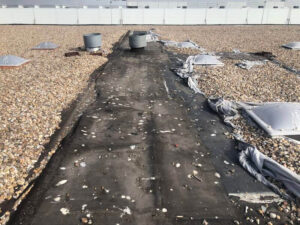
When large groups of seagulls rest in reservoirs, water treatment plants or wetlands, droppings can also create hygiene and environmental management concerns. For more information on this issue, you can read our article on seagulls in landfills and reservoirs.
How to Control a Seagull Infestation in an Inland City
Seagull control should be planned strategically. It is not enough to install a product at random. Before choosing a solution, it is important to analyse where the birds feed, where they rest, what routes they follow, when they appear and which specific areas need protection.
In many inland cities, seagulls move between landfills, food distribution centres, reservoirs, water treatment plants and industrial roofs. For this reason, the most effective solution often involves combining several methods.
1. Sound-Based Deterrents for Seagulls
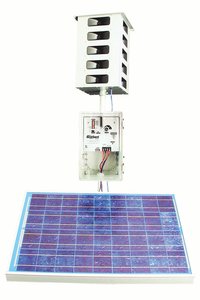
Sound-based deterrents for seagulls reproduce distress calls from the species and sounds from natural predators. Seagulls interpret these sounds as danger signals and tend to move away from the protected area.
These systems can be especially useful on industrial roofs, logistics centres, factories, food facilities and large open areas where acoustic impact can be managed correctly.
2. Visual Deterrents as a Complement
In many cases, effectiveness improves when sound-based deterrents are combined with a visual deterrent, such as a hawk scarecrow. The combined effect creates a more coherent danger signal for the birds: they hear alarm or predator sounds and also see a predator silhouette in the area.
This combination can be useful on roofs, open facilities or areas where the visual effect reinforces the deterrent action during the hours when the acoustic device is not operating.
3. Physical or Mechanical Systems on Landing Points
When the problem is concentrated on specific landing points, physical or mechanical systems can be useful to prevent seagulls from perching. These systems are especially relevant for edges, railings, cornices, antennas, structures and limited access areas.
4. Cleaning the Area Before Installation
Before installing any deterrent system, we recommend cleaning the area thoroughly to remove droppings, feathers, nests and food remains. Creating a clean and neutral environment helps prevent seagulls from continuing to perceive the roof or area as their own.
This preliminary cleaning can significantly improve the effectiveness of the installed systems.
Which Methods Usually Do Not Work Well Against Seagulls?
Not all bird control methods are suitable for seagulls. In our experience, the following are usually not the best options:
- Ultrasonic deterrents: they are not the recommended solution for seagulls.
- Static owl figures: seagulls can quickly become used to them if there is no realistic movement.
- Reflective tapes used on their own: they may create a short-term effect, but they are usually not enough when there are large groups or birds already used to the site.
When the problem is serious, especially on industrial roofs, the solution should be dimensioned according to the surface area and the real level of bird pressure.
Real Case: CTM – Seagull Control on Industrial Roofs in Madrid
Madrid is one of the clearest examples of seagulls adapting to an inland city. One of the most representative real cases is CTM – Madrid Transportation Center, located in Vallecas, in the south of Madrid.
CTM – Madrid Transportation Center manages several warehouses over an area of more than 71,000 m², where storage, distribution, express parcel delivery, freight forwarding and other logistics operators carry out their activity.


CTM is located close to Mercamadrid, one of the major food distribution points in the city. This proximity attracts large numbers of seagulls to the area. The birds use nearby roofs to rest, feed and spend the night.
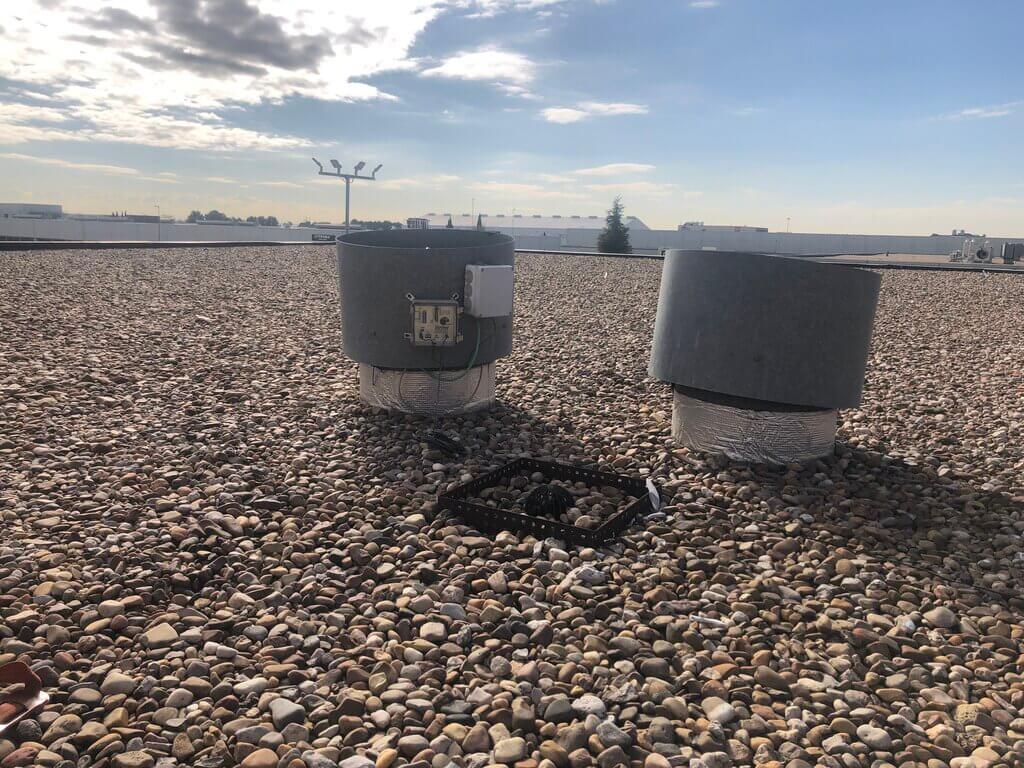
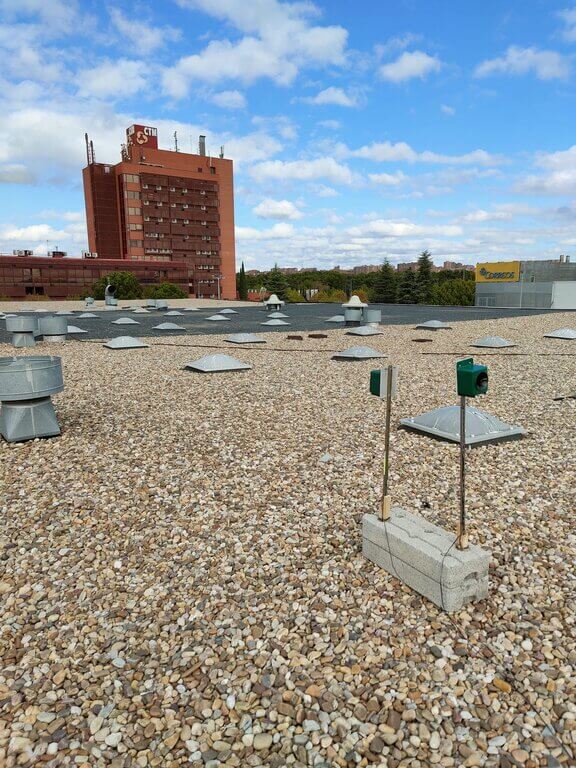
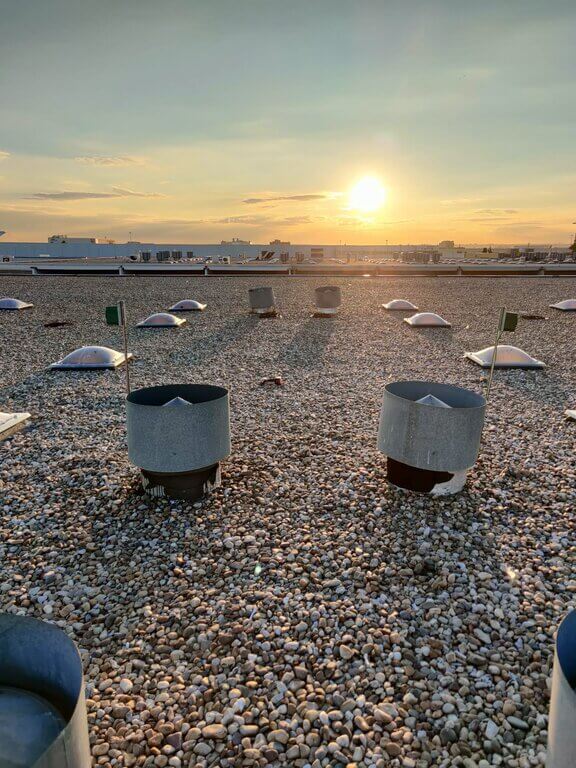
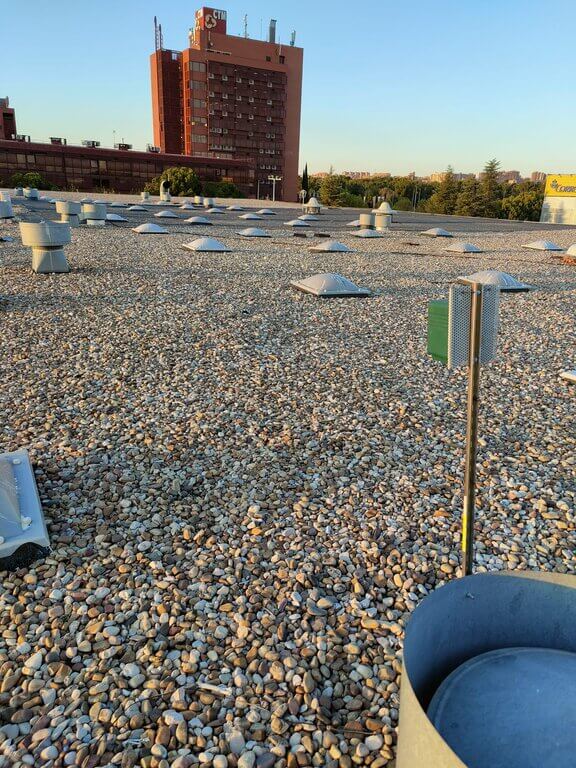
In one of the warehouses managed by CTM, the roof conditions were especially attractive to seagulls: it was flat, sunny and had puddles of water that the birds used to drink and cool off. The seagulls used the roof to rest and eat the remains they collected around Mercamadrid. They even used it as a roosting area.
The presence of seagulls on the warehouse roof created serious maintenance problems: dirt, organic remains, blocked gutters, leaks and dampness.
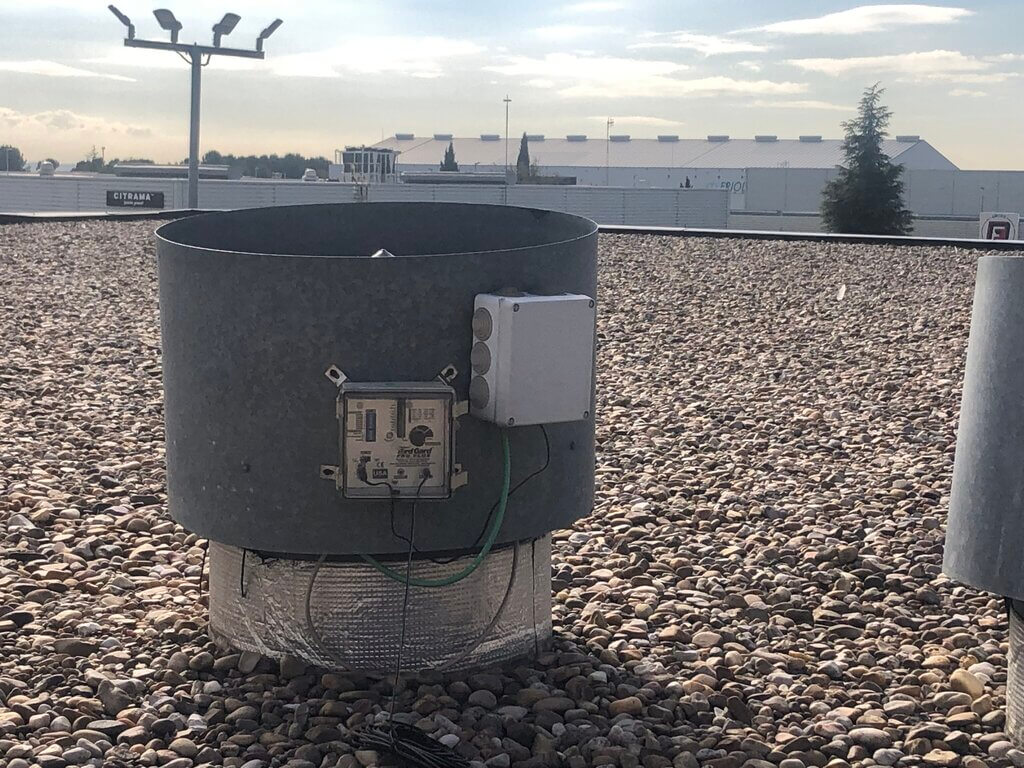
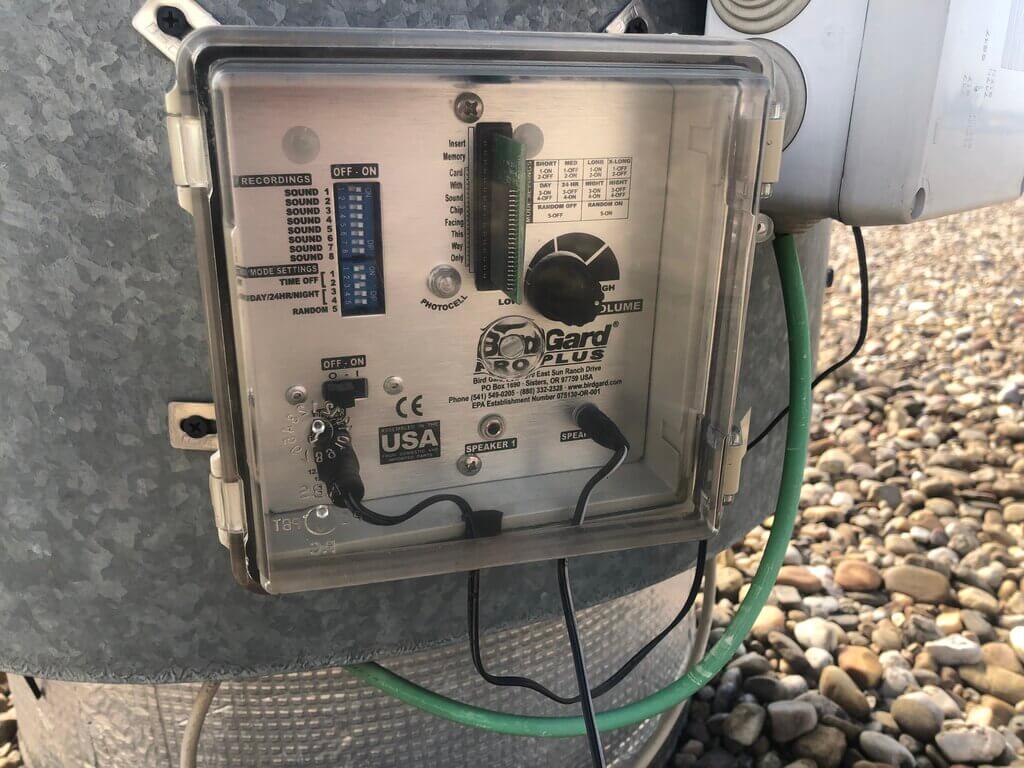
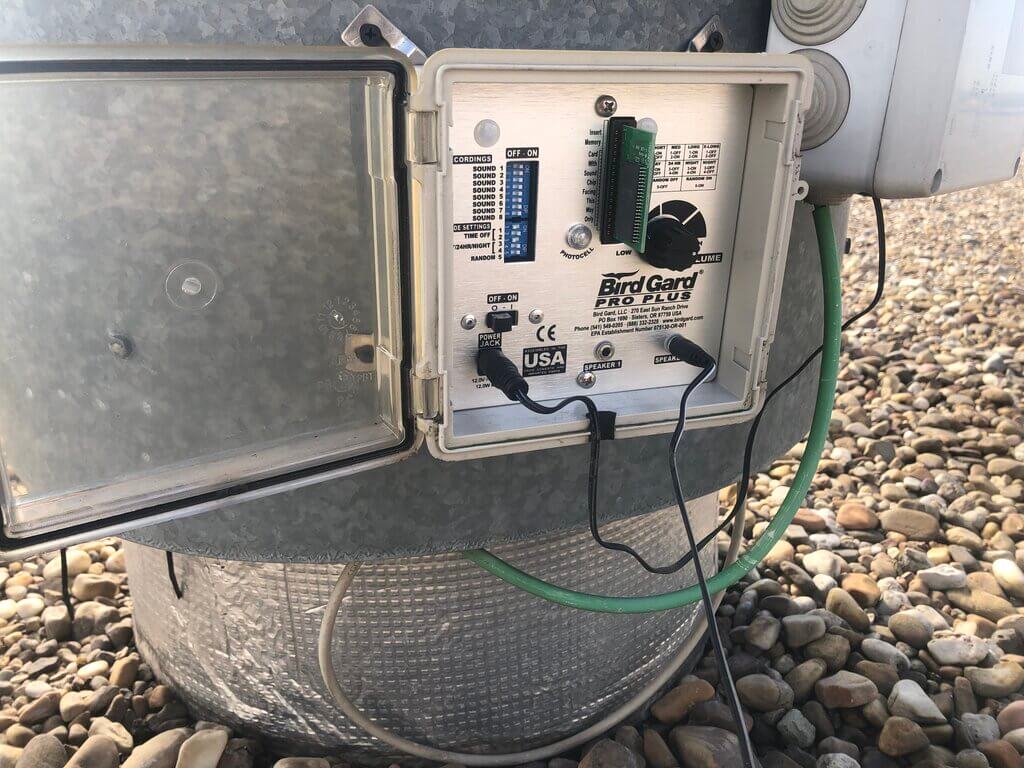
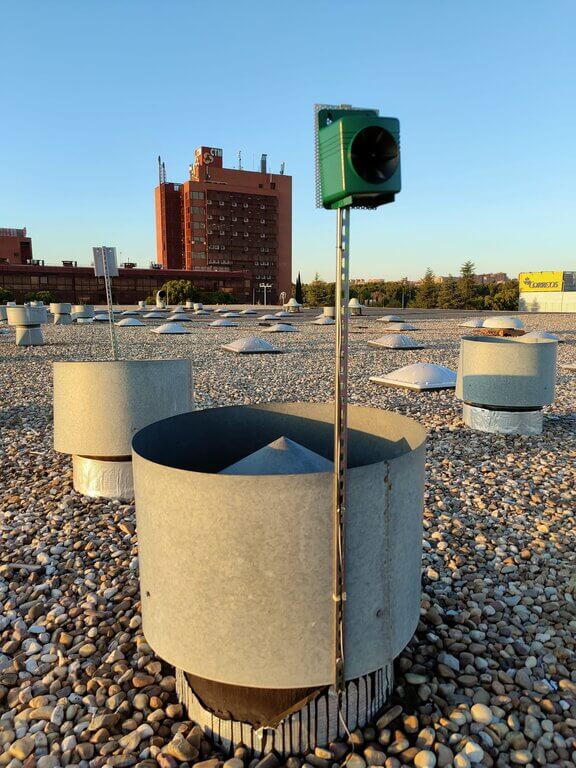
Together with other methods, CTM has been using the BirdGard Pro Plus #20 seagull deterrent since 2018 to help control seagulls on its facilities.
What the CTM Case Shows
The CTM case shows that seagull infestations in inland cities are not just a general urban issue. When a strong food source is nearby and a roof provides safety, water and calm, seagulls can turn an industrial building into a regular feeding, resting and roosting point.
In these cases, the solution must be adapted to the surface area, the level of bird pressure, the available installation points and the company’s activity. This is why every case should be studied before choosing the most appropriate system.
Related Products and Solutions
For seagull problems in industrial roofs, warehouses, logistics centres, terraces, pools, boats or large open areas, you can visit the Repel Seagulls category in our online store.
You can also read our main guide on how to repel seagulls, where we explain which solution may be more suitable depending on the environment and type of problem.
For more real customer cases and related articles:
- Grúas Garro explains how they got rid of seagulls on the roofs of their industrial facilities.
- Case study: how a factory reduced seagull dirt on its rooftops by more than 75%.
- Seagulls in landfills and reservoirs, a technical article about feeding and resting areas.
- Bird control in solar panels and photovoltaic installations, for situations where birds affect solar parks or rooftop systems.
Conclusion
Inland cities can attract seagulls when they offer food, water and safe resting areas. Landfills, food distribution centres, reservoirs, water treatment plants and industrial roofs can all contribute to the problem.
When seagulls concentrate on roofs, warehouses or sensitive facilities, they can create cleaning costs, blocked gutters, leaks, material deterioration and hygiene risks.
The solution should be approached technically, by analysing the environment and combining methods when necessary. BirdGard Iberia can help assess which system is more suitable depending on the surface, bird pressure and characteristics of the site.
Frequently Asked Questions About Seagulls in Inland Cities
Why are there seagulls in inland cities?
Seagulls appear in inland cities because they find food in landfills, rubbish dumps and large food distribution centres, and resting areas in rivers, reservoirs, lakes, water treatment plants, roofs and industrial buildings. Their presence usually increases during the colder months.
Where do seagulls feed in inland cities?
Many seagulls feed in landfills, rubbish dumps, urban waste areas and large food distribution centres. They can then move to quieter roofs or water areas to rest or eat.
Where do seagulls sleep in inland areas?
They often sleep or rest in reservoirs, rivers, lakes, wetlands or water treatment plants. They may also use flat industrial roofs as roosting areas, especially when they are close to food sources.
What problems do seagulls cause on industrial roofs?
They can create droppings, food remains, bones, feathers, blocked gutters, leaks, dampness, material deterioration and high cleaning and maintenance costs.
What solution was used in the CTM case?
CTM has been using the BirdGard Pro Plus #20 seagull deterrent since 2018, together with other methods, to help control seagulls on the roofs of its facilities in Vallecas, south of Madrid.
Do ultrasonic deterrents work for seagulls?
Ultrasonic deterrents are not usually the recommended solution for seagulls. For seagull problems, sound-based systems specific to this species, sometimes combined with visual or physical deterrents, are generally more suitable.
What should be done if there are seagull nests?
If there are nests, eggs or chicks, you should not act hastily. Seagulls can become aggressive when protecting their young. It is advisable to wait until the chicks can leave the area and to check the applicable regulations before installing any deterrent system.
Can the problem be reduced without harming the birds?
Yes. Sound-based, visual and physical deterrents aim to modify the birds’ behaviour so that they perceive the protected area as unsafe or unsuitable. The goal is to reduce their presence in sensitive areas without harming them.