The Cenobio del Valerón, in Gran Canaria, is one of the most emblematic archaeological sites in the Canary Islands. Declared a Site of Cultural Interest, this ancient collective granary is made up of more than 300 silos carved into the mountainside, within a very sensitive volcanic environment.
For years, a large pigeon colony settled in the upper cavities of the site. The accumulation of pigeon droppings, feathers and organic remains was affecting the conservation of the stone, creating dirt in visitor areas and making it necessary to find a permanent solution to prevent pigeons from nesting there again.
In this real case study, we interview Valentín Barroso, director of Arqueocanaria, the company responsible for managing the site, to understand how the project was approached and what results were achieved after installing the solutions recommended by BirdGard Iberia.
Key data from the case
- Location: Cenobio del Valerón, Gran Canaria.
- Type of site: archaeological site declared a Site of Cultural Interest.
- Problem: a large pigeon colony nesting in silos, cavities and rocky ledges.
- Main risk: accumulation of droppings, feathers and organic remains, with an impact on stone conservation and the cleanliness of the visitor route.
- Previous cleaning: approximately 800 kg of pigeon droppings removed.
- Solution implemented: cleaning, trap cages, occasional falconry support, BroadBand Pro, Hawk Scarecrow Eolo and AviFin Gel in strategic points.
- Result: more than two years after installation, pigeons had not settled again at the site.
What are the dimensions of the Cenobio del Valerón?
The Cenobio is located under a natural arch 30 metres wide and 25 metres high. It has more than 300 silos arranged on several levels, making it an especially attractive space for pigeons to take refuge and nest in the cavities.
Because of this structure, the problem was not limited to one specific area. Pigeons could occupy high cavities, rocky ledges and difficult-to-access points, making both cleaning and the prevention of new settlements more complex.
How long had pigeon colonies been present at the Cenobio?
More than 13 years ago, with funding from the Cabildo de Gran Canaria, Arqueocanaria carried out an initial restoration and cleaning project at the site. After these works, the pigeons were initially removed from the Cenobio.
However, they soon returned to nest in the area. Since 2009, pigeons gradually colonised the site again, eventually becoming a significant conservation problem.
How many pigeons were in the cave?
According to Valentín Barroso, it was difficult to calculate the exact number, but the colony was very large. His estimate was hundreds of pigeons.
Where did the pigeons settle?
The pigeons mainly settled in the higher silos or cavities, as well as on the many rocky ledges. This meant that the lower areas, including the visitor access ramp and staircase, were constantly stained with droppings.
In some areas, there were piles of pigeon droppings around 30 centimetres high.
What problems did pigeons cause at the Cenobio del Valerón?
The accumulation of pigeon droppings represented a potential health risk for visitors, especially as the site is open to the public.
In addition, pigeon droppings and remains such as feathers or decomposing carcasses were causing chemical alterations that were wearing away the stone of the site. This posed a serious risk to its conservation.
The microbial flora of pigeon droppings can chemically alter volcanic tuff due to the corrosive effect of the uric and phosphoric acids present. It may also contain compounds that are potentially harmful to people.
How was the pigeon control project approached?
The Cabildo de Gran Canaria commissioned Arqueocanaria to develop a project to control the pigeon colony at the Cenobio and prevent the accumulation of droppings, feathers and decomposing organic remains.
As a first step, the site was thoroughly cleaned and disinfected, with the aim of stopping the action of bacteria and fungi that were affecting the stone. The work lasted around 4 months and approximately 800 kilos of pigeon droppings were removed.
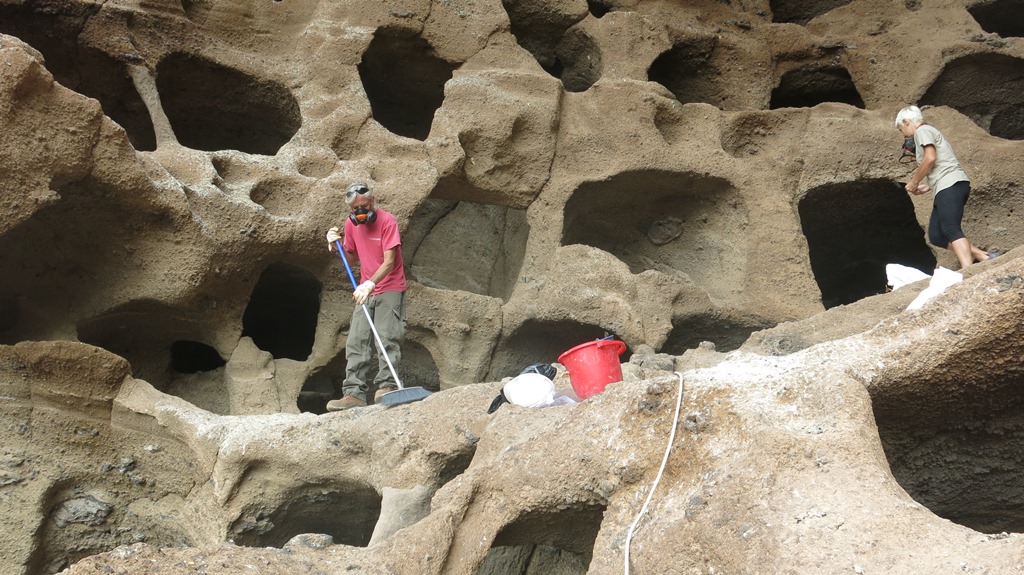
In parallel with cleaning and nest removal, trap cages were placed to capture pigeons and occasional support from a falconer flying a hawk as a deterrent was used.
However, based on the previous experience from 2009, Arqueocanaria knew that these initial measures were necessary but not sufficient. It had already been shown that, after a one-off cleaning operation, pigeons could return and colonise the site again.
For this reason, the objective on this occasion was to implement permanent measures to prevent pigeons from nesting again at the Cenobio.
How did they discover BirdGard Iberia’s solutions?
According to Valentín Barroso, they searched online for companies specialised in pigeon control solutions and decided to contact BirdGard Iberia.
After a phone conversation to explain the case, BirdGard Iberia recommended a combined strategy. In an environment such as the Cenobio, with cavities, height, sensitive areas and a previously established colony, a single isolated measure would not be enough.
What solutions did BirdGard Iberia recommend to repel pigeons?
BirdGard Iberia recommended combining different types of pigeon control solutions. The aim was to create constant deterrent pressure and act on different bird behaviours: presence in the area, perching and nesting.
Specifically, the recommended installation included:
- BroadBand Pro: a bioacoustic and ultrasonic bird repeller that combines birds of prey sounds with ultrasound. In this case, it was used as part of a combined strategy, not as a stand-alone solution.
- Hawk Scarecrow Eolo: a visual kite that simulates the flight of a hawk and was placed at the entrance to the site.
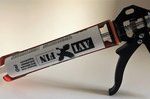
- AviFin Gel: an anti-perching gel placed at strategic points, especially in the highest silos and galleries, to reinforce key areas and prevent pigeons from perching there.
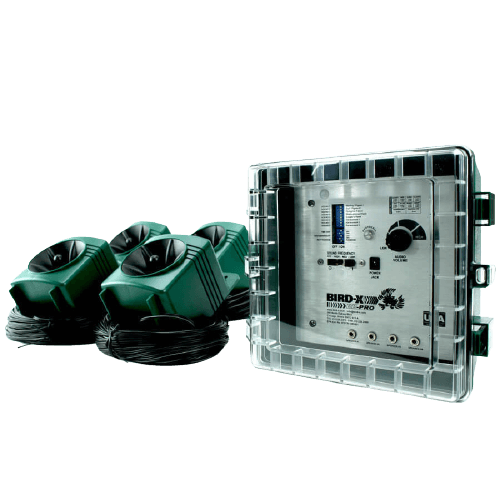
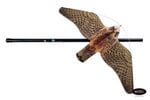
In this video, you can see the hawk kite installed in the surroundings of the site and hear the sounds emitted by the BroadBand Pro bioacoustic bird repeller.
How was the BroadBand Pro programmed?

The BroadBand Pro bird repeller was programmed to emit birds of prey sounds every 20 minutes, 24 hours a day. The ultrasound remained active continuously.
During the pandemic, the site was closed to the public. After reopening, visitors would hear the birds of prey sounds emitted by the BroadBand Pro and ask whether there was a kestrel or an eagle in the cave. In a natural environment, the sound was consistent with the setting and did not disrupt the visitor experience.
What results were achieved after more than two years?
The result was very positive, even better than expected. The real test came during the pandemic, when the site remained closed for many months and there was no human presence in the area.
After lockdown, Arqueocanaria feared that pigeons might have settled again at the Cenobio. However, this was not the case. The solutions implemented continued to work and pigeons did not colonise the site again.
In Valentín Barroso’s words, the solution recommended by BirdGard Iberia to prevent pigeons from nesting at the site worked wonderfully. The project helped reduce the risk of stone corrosion and improved conditions for visitors.
Would you recommend this pigeon deterrent solution?
Of course, I recommend it.
Valentín Barroso explains that many people mainly use typical anti-pigeon spikes. However, in a place such as the Cenobio del Valerón, that solution would have been unattractive and practically unfeasible, as it would have meant covering a very large surface with physical elements.
In this case, the combined solution made it possible to act in a way that was better adapted to the environment: sound pressure, visual reinforcement and anti-perching protection at strategic points.
For this reason, Valentín Barroso recommends BirdGard Iberia’s solutions for pigeon control to restoration companies and organisations that manage historic heritage and need to protect it from the harmful effects of pigeons. They also recommended the solution to the Cabildo de Canarias.
What this case teaches us about pigeon control
This case shows that, when pigeons are already established in a sensitive space, the most effective solution is usually a combined strategy. Initial cleaning is essential, but it does not prevent birds from returning if the environment remains attractive to them.
At the Cenobio del Valerón, the key was to combine cleaning, initial colony control and permanent deterrent systems. The joint use of a sound repeller, a visual element and an anti-perching gel made it possible to act on different parts of the problem.
If you have a similar problem in a historic building, warehouse, roof, elevated area or space where pigeons are already used to perching, you can consult our section of solutions to repel pigeons.
Frequently asked questions about this real pigeon control case
What problem did pigeons cause at the Cenobio del Valerón?
Pigeons nested in the silos, high cavities and rocky ledges of the site. The accumulation of droppings, feathers and organic remains affected the cleanliness of the visitor route and posed a risk to stone conservation.
Why was cleaning the site not enough?
Cleaning was essential to remove accumulated pigeon droppings and disinfect the area, but it did not prevent pigeons from returning to occupy the cavities. In fact, after a previous cleaning operation carried out years earlier, pigeons gradually returned to the site.
What solutions were used to repel the pigeons?
An initial deep cleaning was combined with trap cages, occasional falconry support, a BroadBand Pro bird repeller, a Hawk Scarecrow Eolo and AviFin Gel at strategic perching points.
What role did the BroadBand Pro play?
The BroadBand Pro was used to maintain constant deterrent pressure through birds of prey sounds programmed every 20 minutes and ultrasound active continuously. In this case, it formed part of a combined strategy together with visual and anti-perching methods.
Why were several methods combined?
Because the problem was not concentrated in a single point. Pigeons used high cavities, ledges and difficult-to-access areas. Combining methods made it possible to act on the general presence of birds, their perching points and the areas where they could nest again.
What results were achieved after more than two years?
More than two years after installation, pigeons did not settle again at the Cenobio del Valerón. Even during the months of pandemic closure, with no human presence at the site, the solutions continued to work.
Can this case be useful for other historic buildings or heritage sites?
Yes, it can serve as a reference for other heritage sites, historic buildings, roofs, façades or structures where pigeons are already established. Each case should be studied individually, but the principle is usually the same: prior cleaning, reduction of attractive points and constant deterrent pressure.
Repelling pigeons: additional information
- Solutions to repel pigeons – Product category for pigeon control at BirdGard Iberia.