Removing birds from an industrial warehouse can be difficult when the birds have already found food, shelter, entry points or places to nest. The problem is not limited to seeing birds flying inside the building. In many cases, bird droppings, feathers, dirt on stored goods, hygiene concerns and additional cleaning and maintenance costs also appear.
In this article, we explain how a real case of birds inside a warehouse was solved at an Inasur feed factory in Úbeda, Jaén. This case is especially useful because it shows the problem before the installation, the recommended solution, the videos of the process and the results obtained after several months.
- Key case data
- Why birds enter a warehouse, storage facility or factory
- What problems birds cause inside a warehouse
- Real case: Inasur and the birds inside the warehouse
- Recommended solution to remove birds from the warehouse
- Results obtained
- What this case teaches us
- Which solution to choose depending on the type of warehouse
- Frequently asked questions
Key Case Data
- Company: Inasur – Industria Avícola Sureña S.L.
- Location: compound feed factory in Úbeda, Jaén.
- Type of space: industrial warehouse linked to the poultry and food sector.
- Problem: sparrows and other birds entering the warehouse, flying inside and nesting in gaps in the roof structure.
- Critical points: windows, gaps in corrugated sheeting, interior areas, exterior access points, hoppers, silos and grain unloading areas.
- Main risk: dirt, droppings, presence of birds inside the facility, hygiene concerns and additional maintenance costs.
- Solution installed: BirdGard Pro sonic bird repeller with chip #62 inside the warehouse and Hawk ScareCrow Eolo outside.
- Result: according to the customer’s testimony, after the installation there was “not a single bird inside the building”.
Why Birds Enter a Warehouse, Storage Facility or Factory
Birds can enter an industrial warehouse for different reasons. In some cases, they enter occasionally when doors remain open during loading and unloading. In others, the problem becomes recurring because they find food, shelter, high perching points or spaces where they can nest inside or around the building.
The most common causes of birds in a warehouse, birds in industrial buildings or birds inside storage facilities are:
- Doors open during loading and unloading. This is a common entry route in warehouses, factories and logistics buildings.
- Presence of grain, feed, rations or food remains. In feed factories, livestock facilities or food-related industrial buildings, this factor can especially attract sparrows and other small birds.
- Gaps in roofs, corrugated sheeting, façades, windows or enclosures. Birds can use small openings to enter, take shelter or nest.
- High and quiet areas inside the warehouse. Beams, structures, ledges, gaps or false ceilings can become resting or nesting points.
- Previous bird activity. If there are already nests, droppings or areas frequently used by birds, it is easier for them to keep seeing the warehouse as a safe place.
- Attractive exterior areas. Silos, hoppers, chutes, grain unloading areas or food accumulation points can encourage birds to remain close to access points.
For this reason, removing birds from a warehouse is not only about acting inside the building. In many cases, it is also important to work outside, especially in the points where birds gather before entering.
What Problems Birds Cause Inside a Warehouse
The presence of birds inside a warehouse, storage facility or factory can create significant problems, especially when the building is related to food, livestock, logistics or stored goods.
- Dirt from droppings. Birds soil floors, machinery, structures, goods, packaging, pallets and work areas.
- Hygiene concerns. In food-related or livestock facilities, the presence of birds can affect the hygiene of the environment and increase concern about possible contamination.
- Cleaning and maintenance costs. When birds remain inside the warehouse, cleaning becomes recurrent and can generate additional costs.
- Damage to stored materials. Goods, packaging or pallets may be affected by droppings, feathers or nest remains.
- Operational disturbance. Having birds flying inside a factory or warehouse makes normal work more difficult and can be especially problematic when there is machinery, noise or constant movement of people and vehicles.
- Nesting in hard-to-reach areas. When birds nest in high gaps, roofs, windows or structures, the problem becomes more persistent.
In the case of Inasur, the problem was mainly related to sparrows entering the warehouse and nesting in gaps in the corrugated sheeting, just above the windows.
Real Case: Inasur and the Birds Inside the Warehouse
Inasur – Industria Avícola Sureña S.L. – is a well-established company in the poultry sector. Its main activity is the production and marketing of chicken. The company has more than 30 years of experience in the sector and several poultry farms throughout Andalusia.
In addition to its farms, Inasur has factories for the production of compound feed, incubation rooms and other facilities related to its activity. In one of these feed factories, located in Úbeda, Jaén, they had a problem with birds entering the warehouse.
José Liñán, Head of Maintenance at Inasur in Úbeda, contacted BirdGard Iberia to explain the case and look for a solution that would help remove the birds from the warehouse and reduce the dirt problems they were causing.
What problem did Inasur have with the birds?
José Liñán described the problem as follows:
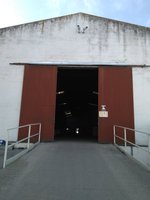
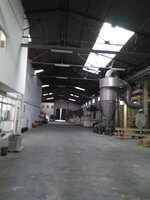
“In the warehouse we see in the photos, the sparrows nest above the windows, in the gaps of the corrugated sheeting. Everything is glazed and airtight, but, despite that, birds enter the warehouse”.
“In this video, you can hear the noise of the factory. You can also hear the sparrows singing, and even see some birds flying in the warehouse”.
“We need to remove these birds from the warehouse and prevent the dirt problems they create”, Liñán explained to BirdGard Iberia.
Where were the birds entering the warehouse?
According to the customer’s description, the sparrows were using gaps in the corrugated sheeting and upper areas of the warehouse, especially above the windows. This detail is important because it shows one of the most common issues in cases of birds inside industrial buildings: even when a building appears to be closed, birds can find small access points or shelter areas that are difficult to detect at first sight.
In addition, as this was a feed factory, the surrounding exterior area could also be attractive to birds due to the presence of grain, flour, hoppers, silos and unloading areas. For that reason, the solution should not be limited to the inside of the warehouse, but also act on the exterior areas where birds gathered before entering.
Recommended Solution to Remove Birds from the Warehouse
After reviewing the photos and video of the birds inside the warehouse, BirdGard Iberia recommended a combined strategy to Inasur: a sonic bird repeller specifically configured for sparrows inside the warehouse and visual deterrents outside to reduce the presence of birds around access points and nearby areas.
The logic of the solution was clear:
- Inside the warehouse: change the sparrows’ perception of safety through specific sounds.
- Outside the warehouse: create visual pressure in the areas where birds gathered before entering, such as silos, hoppers, chutes or access points.
- In the medium term: prevent birds from continuing to see the warehouse as a comfortable place to shelter or nest.
BirdGard Pro sonic bird repeller with chip #62 inside the warehouse
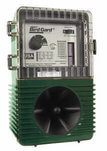
For the inside of the warehouse, BirdGard Iberia recommended the BirdGard Pro bird repeller with chip #62, a sonic device specifically configured for sparrows.
- It is a sonic bird repeller.
- It can be configured with a specific chip for sparrows.
- It provides coverage for areas of up to 0.6 hectares.
- It emits a combination of alarm calls, predator sounds and electronic harassment sounds.
- Its objective is to make the warehouse stop being perceived as a safe area for sparrows.
In cases like this, where the main problem is sparrows inside a warehouse, specific audible sounds may be more suitable than generic solutions or isolated methods.
Hawk ScareCrow Eolo outside the warehouse
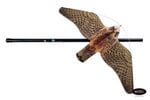
For the outside of the warehouse, BirdGard Iberia recommended installing the Hawk ScareCrow Eolo near the points where birds were gathering.
- The Hawk ScareCrow Eolo simulates the flight of a bird of prey.
- It works as a visual complement to the sonic bird repeller.
- It can help reduce the presence of birds around entrances, silos, hoppers, chutes or exterior areas close to the warehouse.
- In the case of Inasur, BirdGard Iberia recommended placing it near the areas where birds gathered before entering the warehouse.
The combination of sound inside the building and visual pressure outside is especially interesting when the goal is not only to remove birds from a warehouse, but also to reduce the probability of them entering again.
How was the solution installed?
Inasur followed BirdGard Iberia’s recommendations and installed the BirdGard Pro #62 sonic bird repeller inside the warehouse and two Hawk ScareCrow Eolo units outside.
- One of the hawks was installed in the area of hoppers, storage silos and the flour chute.
- The second hawk was placed near the grain unloading chutes, where many sparrows and also pigeons used to gather.
- The BirdGard Pro #62 sonic bird repeller was installed at one end of the building, helping to protect the interior from the presence of birds.
This distribution made it possible to act both on the birds that were already inside and on the exterior points where they gathered before entering.
Results Obtained: “Not a Single Bird Inside the Building”
Several months after the installation of the solutions recommended by BirdGard Iberia, José Liñán explained the results obtained:
“As you can see in the video, there is not a single bird inside the building anymore. It has been spectacular! The sparrows left the warehouse as soon as we put the sonic bird repeller into operation”.
This result corresponds to Inasur’s specific case and the particular context of its warehouse. In other cases, effectiveness may depend on the bird species, the level of presence, the existence of nests, the available entry points, previous cleaning and the correct installation of the equipment.
José Liñán also highlighted an important practice to reduce the risk of habituation:
“However, we take the precaution of changing the position of the sonic bird repeller every week, moving it from one end of the building to the other. This way, we ensure that the sounds do not always come from the same point, and thus prevent birds from becoming accustomed to them”.
Regarding the hawks installed outside, he added:
“The anti-bird hawks we have outside are very realistic imitations of flying hawks. When seen from a distance, it looks like we actually have hawks guarding the area. In fact, we have already extended the bird control solutions recommended by BirdGard Iberia to protect our other farms in Andalusia”.
In this other video, you can see the installation of new flying hawk bird scarers at another one of their integrated farms, where it was important to avoid the presence of pigeons and other birds:
José Liñán, Head of Maintenance at Inasur – Industria Avícola Sureña, concluded:
“I recommend this solution to any company that has problems with birds entering their buildings. Our experience has been completely positive. It has solved the problem. It is a very effective solution”.
What This Case Teaches Us About Removing Birds from a Warehouse
The Inasur case shows that, when birds are already entering an industrial warehouse, the solution should be approached globally. Acting on a single point may not be enough if the problem has several causes: entry through gaps, presence of food, shelter areas, exterior perching points and nests in elevated areas.
- It is important to identify the species. In this case, the main problem was sparrows, so a sonic device with a specific chip was recommended.
- It is often advisable to act both inside and outside the warehouse. Sound was used inside, while visual hawks were used outside.
- Access points and exterior areas matter. Silos, hoppers, unloading areas or chutes can attract birds before they enter the building.
- The location of the device is important. Periodically changing the position of the sonic bird repeller can help reduce habituation.
- A combination of methods is usually more robust. In persistent problems, sound and visual stimuli can reinforce each other.
- The result of a real case should not be interpreted as a universal guarantee. Each warehouse must be assessed according to the bird species, building structure, access points, cleaning, food availability and bird pressure.
Which Solution to Choose if You Have Birds in a Warehouse, Storage Facility or Factory
The right solution will depend on the type of warehouse, the bird species causing the problem and whether the birds are inside, outside or in both areas.
- If there are sparrows inside the warehouse: it may be appropriate to evaluate a sonic bird repeller with a specific chip for sparrows, as in the Inasur case.
- If birds gather around entrances, silos, hoppers or unloading areas: it may be advisable to reinforce the exterior with visual deterrents such as the Hawk ScareCrow Eolo.
- If the problem affects a food-related or livestock facility: special attention should be paid to cleaning, food availability and entry points.
- If birds are perching on specific points: anti-perching solutions or physical barriers may need to be evaluated in addition to deterrents.
- If the problem affects stored goods: it is advisable to check doors, loading bays, roof gaps, food remains and areas where birds may take shelter.
If you want to compare solutions according to the type of facility, you can consult our guide on the best bird repeller for an industrial building.
If the problem is related to birds entering storage facilities, you can also read the article about birds inside warehouses, where we explain causes, risks and preventive measures.
If the main problem is sparrows, you can see the available solutions in our sparrow repeller category.
If you are not sure which solution to apply in your case, you can contact BirdGard Iberia for advice.
Frequently Asked Questions About Removing Birds from a Warehouse
How can you remove birds from an industrial warehouse?
The first step is to identify why birds are entering and what they are finding inside the warehouse: food, shelter, perching areas, entry gaps or nesting points. Then it is advisable to clean the area, reduce available food, check access points and apply a deterrent solution adapted to the bird species. In many cases, sound, visual and physical methods may need to be combined.
Why do birds enter a warehouse?
Birds can enter through open doors, gaps in roofs, windows, façades, loading areas or small openings. They may also be attracted by grain, feed, rations, food remains, shelter or high areas where they can perch or nest.
What problems do birds cause inside a warehouse or storage facility?
The main problems are dirt from droppings, feather accumulation, hygiene concerns, damage to goods or packaging and additional cleaning and maintenance costs. In food-related, livestock or industrial facilities, the presence of birds inside the warehouse can be especially problematic.
Which bird repeller works best for birds in a warehouse?
It depends on the species and the type of warehouse. If the problem is sparrows inside the building, a sonic bird repeller with a specific chip for sparrows may be appropriate. If birds gather outside, near entrances, silos or hoppers, it may be useful to reinforce the area with visual deterrents such as the Hawk ScareCrow Eolo. In persistent problems, combining several methods is usually more robust.
Do ultrasonic devices work to remove birds from a warehouse?
They are usually not the first option when the problem affects a large warehouse with open doors, industrial noise, available food or birds already settled inside. In these cases, it is normally advisable to evaluate specific audible sounds, visual deterrents, physical barriers or a combined strategy. The solution should be chosen according to the species and the characteristics of the warehouse.
How can you prevent birds from entering the warehouse again?
It is advisable to check and correct entry points, reduce available food, clean droppings and nest remains, and also act on the exterior areas where birds gather before entering. In some cases, combining an interior sonic bird repeller with exterior visual deterrents may be useful.
What should you do if there are nests inside the warehouse?
Before removing a nest, it is advisable to check whether it is active and whether it contains eggs or chicks. It is also important to act in accordance with the applicable regulations and, if in doubt, consult a professional or the competent authority. After removing an inactive nest, it is advisable to clean the area and apply preventive measures to stop birds from returning to the same point.
Is it advisable to combine sound and visual deterrents?
Yes. In many cases of birds inside warehouses, storage facilities or factories, combining sound and visual deterrents can be more robust than relying on a single measure. Sound acts on the perception of safety inside the building, while visual deterrents can help reduce the presence of birds outside and around access points.