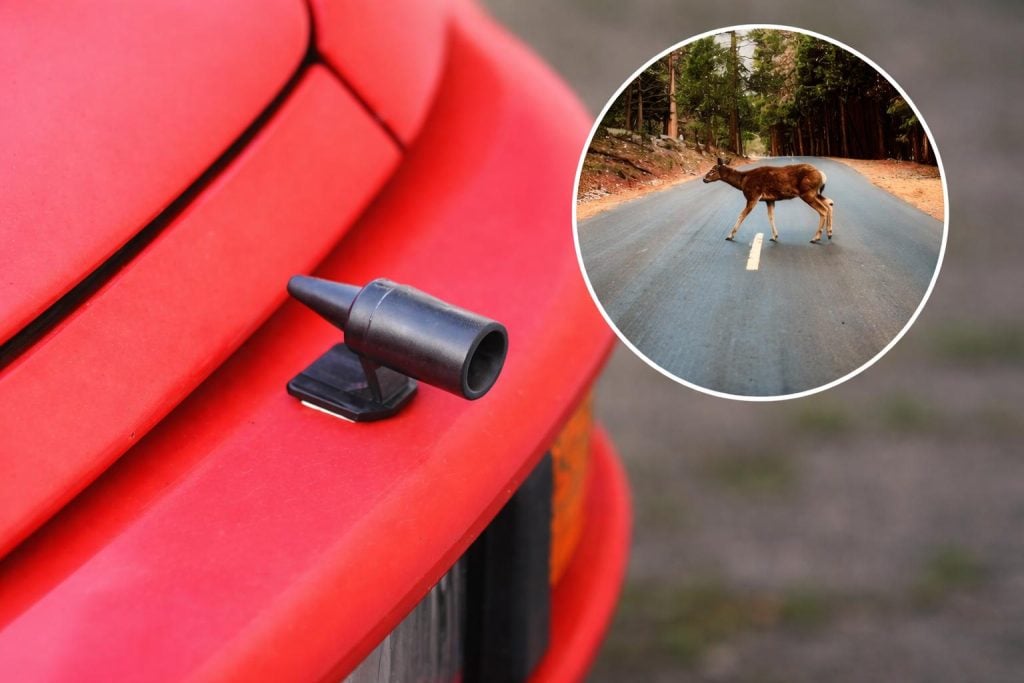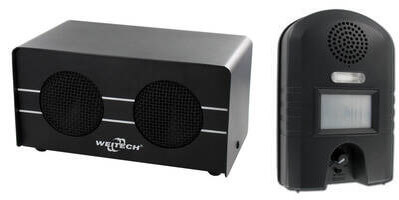
Foxlights are light-based deterrent devices designed to help protect livestock from wolves, foxes and other nocturnal predators. At night, they emit variable sequences of light intended to create the impression that people are moving or patrolling around the livestock.
This type of system is used as a preventive measure on livestock farms and grazing areas, particularly at night, when predators may approach the animals.
In recent years, Foxlights have been used in a number of conservation projects and programmes aimed at reducing conflicts between large carnivores and livestock farming. Greece provides one of the best-documented examples, with experience from working farms, LIFE projects and initiatives promoted by NECCA (Natural Environment & Climate Change Agency), the Greek authority responsible for the natural environment and protected areas.
These experiences provide a stronger basis for answering a common question among livestock farmers: do Foxlights really work to deter wolves?
The available evidence indicates that Foxlights are a useful preventive tool against wolves and other predators, particularly at night. However, they should not be regarded as an infallible barrier or as a stand-alone solution that guarantees livestock will never be attacked. The strongest protection strategies combine several preventive measures.
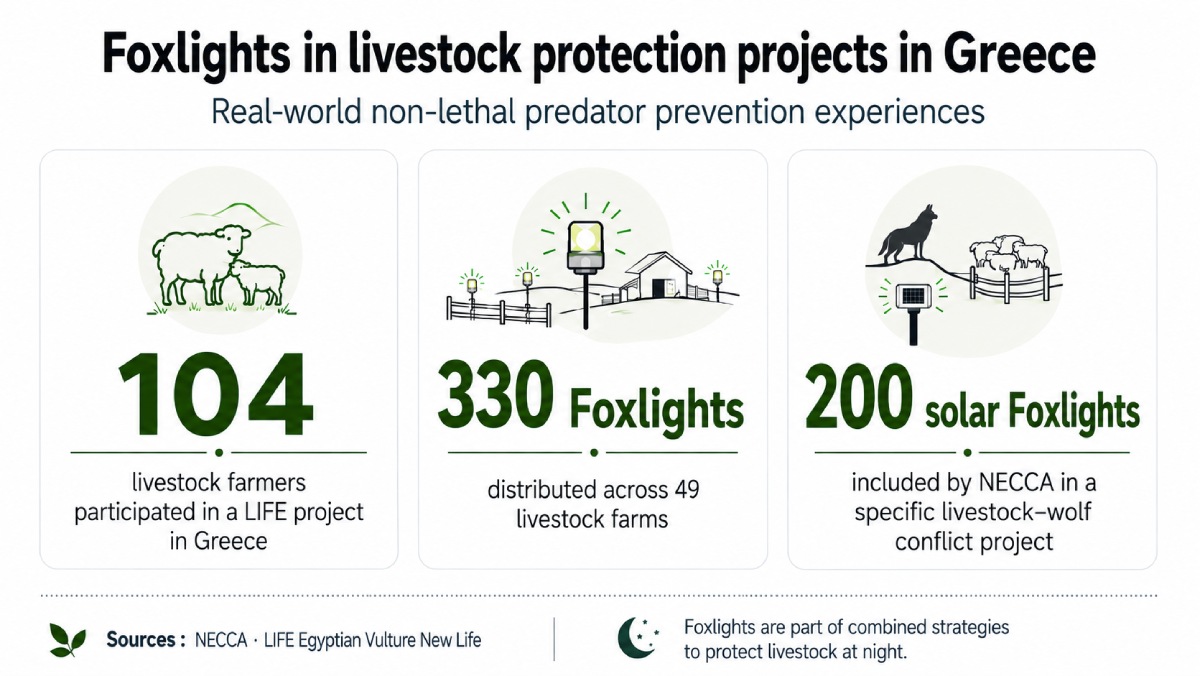
- A LIFE project tested Foxlights, livestock guardian dogs and fladry visual barriers with 104 livestock farmers.
- A report prepared for the EU Platform on Coexistence between People and Large Carnivores documents the distribution of 330 Foxlights across 49 livestock farms.
- Farmers particularly valued their ease of installation and maintenance.
- Camera traps confirmed a deterrent effect on foxes.
- NECCA included 200 solar Foxlights in a project specifically designed to reduce livestock-wolf conflict.
What are Foxlights and how do they work?
Foxlights are a visual deterrent system for nocturnal predators.
Rather than keeping a conventional light permanently switched on, the devices generate variable lighting patterns, combining different colours, rhythms and directions.
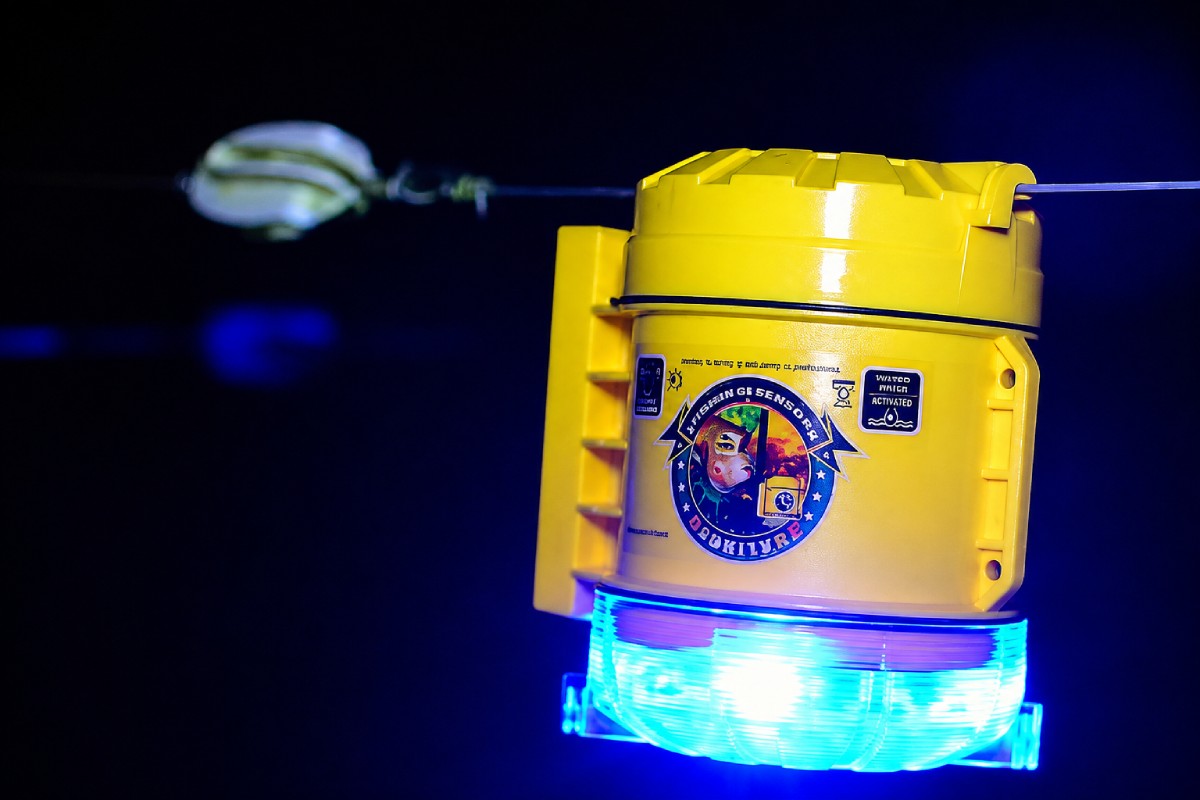
The aim is to make the stimulus less predictable to the animal and create the impression of human activity around the protected area.
This is an important difference compared with a fixed light. A light that remains permanently illuminated may eventually become a familiar part of an animal’s environment. Foxlights instead use changing patterns designed to make this habituation process more difficult.
The devices activate automatically at dusk and can be installed around livestock pens, night resting areas and other points from which predators may approach.
Foxlights are available in solar-powered and battery-powered versions. On BirdGard Iberia you can find specifications, prices, videos and further information about Foxlights for deterring wolves and foxes.
For a more general introduction to their operation, applications and available versions, you can also read our guide on using Foxlights to protect livestock from wolves and foxes.
Light deterrents are among the preventive measures used in Greece
NECCA explicitly includes light deterrents among the preventive tools used to reduce conflicts between livestock farming and wildlife.
According to the Greek authority, modern systems of this type emit combinations of colours at different times, rhythms and directions, creating the impression of human presence. NECCA describes them as particularly effective for frightening and keeping predators away during the night. The original explanation can be found on NECCA’s page on wildlife conflict prevention measures.
Installing these devices around areas where livestock spend the night allows them to be easily combined with other preventive measures. NECCA also refers to livestock guardian dogs, electric fencing and visual barriers known as fladry.
What is fladry?
Fladry is a visual barrier consisting of a perimeter line from which strips or flags, usually red or orange, are suspended.
The strips move in the wind and create a visual stimulus that can temporarily discourage wolves from crossing the boundary.
NECCA explains that this type of barrier can be installed around night pens or grazing areas. Its main limitation is habituation: over time, wolves may become accustomed to its presence. This also helps explain why livestock protection programmes generally combine several complementary techniques rather than relying on a single deterrent.
A public project specifically addressing livestock-wolf conflict
In 2023, NECCA published a procurement project entitled “Actions to address the livestock-wolf conflict”.
The programme involved work in different regions of Greece and the use of several preventive measures on livestock farms and grazing areas. The equipment specified for the project explicitly included solar-powered Foxlights.
The official documentation specified a total of 200 solar Foxlights intended to deter wolves from approaching livestock farms and grazing areas.
The programme did not prescribe an identical installation for every farm. Distribution was to take into account factors including:
- the number of animals in the herd or flock;
- the size of the grazing area;
- vegetation;
- terrain;
- the particular characteristics of each livestock farm.
In one of the project areas, for example, the planned deployment included 100 Foxlights, together with other deterrent devices, for at least 30 livestock farmers. Other areas included additional groups of 50, 30 and 20 Foxlights.
This approach reflects the realities of extensive livestock farming: there is no single installation layout that is suitable for every farm. The number and positioning of the devices should be adapted to the terrain, the livestock and the specific characteristics of the area being protected.
The NECCA project also includes effectiveness monitoring
NECCA’s programme goes beyond simply distributing equipment.
The documentation includes a specific phase for checking the operation and effectiveness of the deterrent measures, including Foxlights, turbo-fladry, acoustic devices, other deterrent equipment and GPS collars.
The procedure includes interviews with livestock farmers, control groups, farm visits and data collection. It also provides for the possible use of camera traps to evaluate the different systems.
This approach is particularly appropriate for wildlife management because predator behaviour can vary according to the area, prey availability, type of livestock, vegetation and farming practices. The effectiveness of any preventive measure therefore needs to be assessed under real-world conditions and reviewed over time.
Foxlights had already been tested with livestock farmers in Greece
The use of these devices in Greece did not begin with the NECCA project.
One of the most comprehensive earlier experiences comes from the European LIFE Egyptian Vulture New Life project, which involved organisations including the Hellenic Ornithological Society/BirdLife Greece.
Although the main objective of the programme was to contribute to the conservation of the Egyptian vulture (Neophron percnopterus), part of the project addressed conflict between livestock farming and large predators.
Livestock attacks can generate serious conflicts with species such as wolves, foxes and bears and, in some cases, contribute to the illegal use of poisoned baits. These baits may also kill protected species that were not the intended target, particularly scavenging birds.
Reducing damage caused by predators can therefore have two positive effects: protecting livestock farmers and supporting coexistence with wildlife.
A study involving 104 livestock farmers under real-world conditions
As part of the LIFE Egyptian Vulture New Life project, different preventive methods were tested directly with livestock farmers in Thessaly, Epirus and Thrace.
The three main measures evaluated were:
- livestock guardian dogs;
- fladry visual barriers;
- Foxlights.
A total of 104 livestock farmers participated. Monitoring included regular farm visits, 21 camera traps and 117 questionnaires.
The aim was to assess both the deterrent capacity of the different measures and their practicality, ease of use and acceptance among livestock farmers.
What results were obtained with Foxlights?
The project produced positive results.
During the periods in which participating farmers used the preventive methods being tested, no livestock losses caused by predator attacks were recorded.
This result needs to be interpreted carefully. It does not mean that the complete absence of attacks can be attributed exclusively to Foxlights. Many farmers were using several preventive measures simultaneously, and the study itself shows a clear preference for combining different protection methods.
What the experience does show is that Foxlights formed part of preventive strategies that produced positive results on working livestock farms.
Livestock farmers rated Foxlights positively
When Foxlights were compared with fladry barriers, participants rated Foxlights more favourably.
The main reasons included:
- ease of installation;
- ease of maintenance;
- perceived effectiveness against different predators, not only wolves.
This ease of installation can be particularly useful in extensive or transhumant livestock systems, where the animals may move between locations and protective equipment needs to be repositioned.
A report prepared for the EU Platform on Coexistence between People and Large Carnivores documents that 330 Foxlights were distributed across 49 livestock farms as part of this programme, generally at a rate of 4 to 9 devices per farm.
This figure provides a useful example of how Foxlights have been deployed in a real-world project, but it should not be interpreted as a general installation rule. Every farm requires an individual assessment.
Is there evidence that Foxlights deter wolves?
The available experience supports the conclusion that Foxlights are a useful tool within strategies designed to prevent wolf attacks.
They have been used on working livestock farms, received positive feedback from farmers and been incorporated into programmes specifically designed to address livestock-wolf conflict.
What the available evidence does not yet allow us to do is assign a specific percentage reduction in wolf attacks to Foxlights when used on their own.
In the LIFE project, for example, farmers often used several preventive measures at the same time. Camera traps did, however, specifically confirm a deterrent effect of Foxlights on foxes.
For wolves, the most rigorous conclusion is therefore that Foxlights are a valid and useful preventive measure, particularly when incorporated into a livestock protection strategy that combines different methods.
More than 300 Foxlights across 49 farms: a real-world deployment
The use of 330 Foxlights across 49 farms also highlights another important point: this was not simply a small experimental trial involving one or two devices.
The devices were deployed across dozens of livestock farms and under different terrain conditions.
Foxlights have also continued to be used in subsequent projects.
In the Pindos region, the Hellenic Ornithological Society has continued to provide livestock farmers with preventive tools against predators. Measures used include Foxlights, electric fencing, photovoltaic systems and GPS collars.
During a project visit, farmers demonstrated how they were using Foxlights and other measures to protect their livestock. The organisation reported that these tools were proving very effective in protecting livestock from attacks by wolves and other predators.
This is field experience reported by the organisation responsible for the programme rather than a controlled scientific trial. Nevertheless, it is relevant because it shows that the technology continued to be used several years after the initial tests.
Foxlights work best as part of a combined protection strategy
One of the clearest messages from the experiences reviewed above is that preventing wolf attacks is more effective when several protective measures are combined.
Foxlights primarily add a layer of night-time visual deterrence.
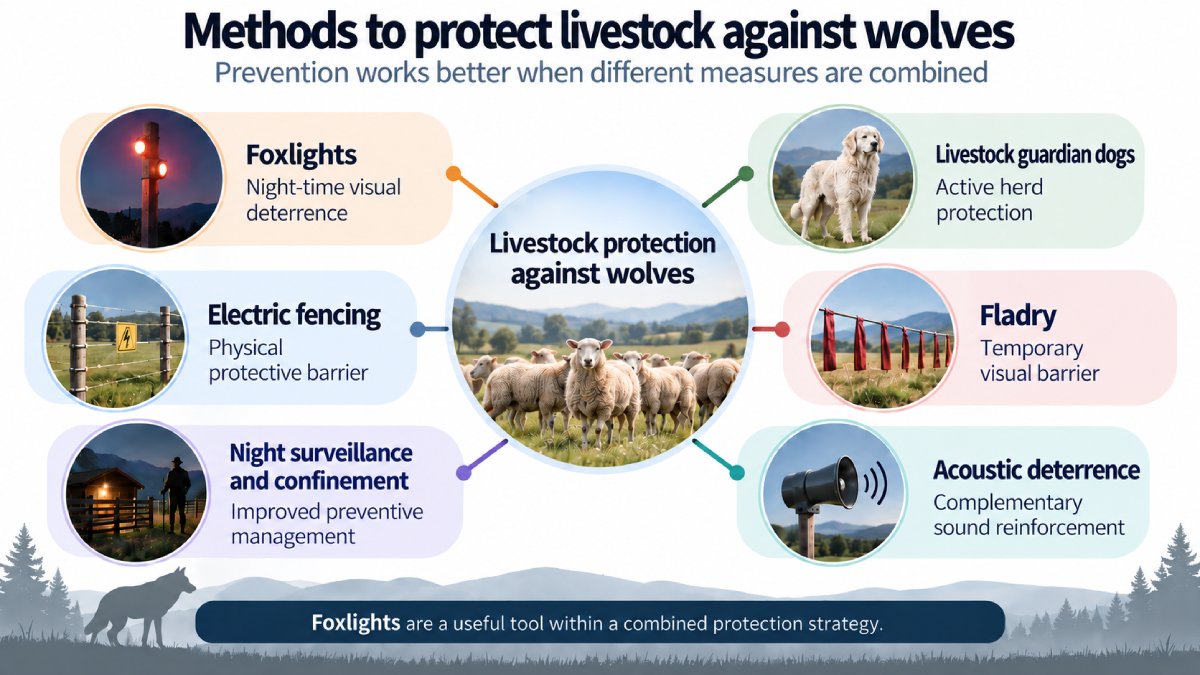
Depending on the characteristics of each farm, Foxlights can be combined with:
- shepherd supervision;
- night-time penning;
- livestock guardian dogs;
- electric fencing;
- visual barriers;
- acoustic deterrents;
- other livestock management measures.
The value of this combined approach is not limited to the projects involving Foxlights.
A study published in the scientific journal Biological Conservation in 2023, involving 70 sheep and goat flocks and 68 cattle farms in north-western Greece, identified three practices associated with a significant reduction in the risk of wolf predation: greater shepherd supervision, systematic night-time confinement and an adequate number of livestock guardian dogs.
Installing a deterrent system should therefore not automatically replace livestock management practices that are already working effectively. The aim should be to add further layers of protection.
Can wolves become accustomed to deterrent systems?
Habituation is one of the main challenges faced by any system designed to deter wildlife.
If an animal repeatedly encounters a stimulus and learns that it does not represent a genuine threat, its response may diminish.
This is precisely why Foxlights use variable lighting patterns rather than a fixed light. Even so, no deterrent method should be assumed to remain effective indefinitely without monitoring.
The experience with fladry barriers is illustrative. Camera traps used during the LIFE project showed that their ability to deter wolves decreased after approximately two months as the animals became accustomed to their presence.
For this reason, it is advisable to review the protection strategy periodically, reposition devices where appropriate and combine different types of stimuli.
Do Foxlights only deter wolves?
No.
Although much of their use in Europe is associated with protecting livestock from wolves, Foxlights can also be used against other nocturnal predators.
The LIFE study in Greece indicates that livestock farmers also rated Foxlights positively for their perceived effectiveness against predators other than wolves. In addition, the camera traps specifically confirmed a deterrent effect on foxes.
Foxlights: a non-lethal method for protecting livestock
Another important characteristic of Foxlights is that they are a non-lethal deterrent method.
The system is not intended to capture, injure or kill the predator. Instead, it aims to alter the animal’s perception of its surroundings and make approaching the livestock area appear less safe.
This type of tool is particularly relevant in areas where livestock farming shares the landscape with large carnivores because it focuses on conflict prevention.
The aim is not only to reduce potential economic losses, but also to support more sustainable coexistence between livestock farming and wildlife.
So, do Foxlights work to deter wolves?
The accumulated experience supports the conclusion that yes, Foxlights are a useful tool for helping to prevent wolves and other predators from approaching livestock, particularly at night.
There are several reasons for this conclusion:
- they have been tested directly by livestock farmers under real-world conditions;
- hundreds of devices have been distributed across livestock farms;
- farmers have rated them positively;
- later projects have continued to use them;
- NECCA has specifically included them in programmes designed to reduce livestock-wolf conflict.
At the same time, Foxlights should not be regarded as an infallible solution or as a replacement for all other livestock protection measures.
The strongest prevention strategy is to assess each livestock operation individually and combine the tools best suited to:
- the predator species;
- the size of the area;
- the terrain;
- the vegetation;
- where the livestock spend the night;
- the predators’ usual approach routes;
- the protective measures already in place.
Frequently asked questions about Foxlights and wolves
What are Foxlights?
Foxlights are light-based deterrent devices designed to simulate human activity at night using variable sequences of light. They are used around livestock farms and other areas that need protection from approaching predators.
Do Foxlights work to deter wolves?
Yes. Foxlights are used as a preventive tool to discourage wolves from approaching livestock at night. They have been tested on working farms, and NECCA has included them in programmes specifically designed to reduce livestock-wolf conflict. However, they cannot guarantee that attacks will never occur.
Are there studies on the effectiveness of Foxlights?
Yes. The LIFE Egyptian Vulture New Life project evaluated Foxlights alongside livestock guardian dogs and fladry barriers with 104 livestock farmers. Monitoring included farm visits, 117 questionnaires and 21 camera traps. Farmers rated Foxlights positively, particularly for their ease of installation and maintenance.
Have Foxlights been used by public authorities?
Yes. NECCA, the Greek public authority responsible for the natural environment and protected areas, included 200 solar Foxlights in a procurement project specifically dedicated to measures for reducing livestock-wolf conflict.
Do Foxlights work against foxes?
Camera traps used in the LIFE Egyptian Vulture New Life project confirmed a deterrent effect of Foxlights on foxes.
How many Foxlights do I need to protect a livestock farm?
There is no universal number. In one project in Greece, farms generally received between 4 and 9 Foxlights, but this should only be regarded as a real-world example rather than a general installation rule. The appropriate number depends on the area, terrain, vegetation, livestock location and the predators’ likely approach points.
Where should Foxlights be installed?
They are normally installed around livestock pens, night resting areas or points from which predators may approach. The installation should be adapted to the layout and characteristics of the area being protected.
Do Foxlights replace livestock guardian dogs or electric fencing?
Not necessarily. Experiences with livestock farmers show that strategies combining several measures provide more complete protection. Foxlights can complement livestock guardian dogs, supervision, night-time penning, electric fencing and other preventive measures.
Can Foxlights harm wolves?
No. Foxlights are a non-lethal deterrent method. They use light stimuli to discourage an animal from approaching without capturing or harming it.
Solar and battery-powered Foxlights
BirdGard Iberia offers solar and battery-powered Foxlights. You can find specifications, prices, videos, reviews and further information on our Foxlights product page.
For other solutions designed to help protect livestock from wolves and foxes, visit our wolf and fox deterrent solutions.
If you need to protect livestock and are unsure which solution is most appropriate, contact us with information about the predator causing the problem, the approximate area to be protected, the type of livestock and the characteristics of the location.
Sources and references
- NECCA – Natural Environment & Climate Change Agency: preventive measures for reducing conflicts with wildlife.
- NECCA: documentation for “Actions to address the livestock-wolf conflict”.
- Saravia-Mullin et al. (2023): Final assessment of the pilot testing of alternative methods to reduce wildlife conflict in Greece, LIFE Egyptian Vulture New Life.
- EU Platform on Coexistence between People and Large Carnivores: Large Carnivore impacts: Case study Ioannina Regional Unit, Greece – Wolf and Extensive Sheep/goat and Cattle Interactions.
- Hellenic Ornithological Society / BirdLife Greece: PONT field experience in the Pindos region.
- Petridou et al. (2023), Biological Conservation: Do husbandry practices reduce depredation of free-ranging livestock? A case study with wolves in Greece.