If pigeons or other birds are getting underneath your solar panels, the main solution should be a physical perimeter barrier that blocks access to the gap between the panel and the roof.
For this type of problem, the most suitable systems are usually BirdBlocker or a properly installed anti-pigeon mesh. Spikes, gels, visual bird deterrents or ultrasonic devices can be useful in some situations, but they do not usually solve the problem of birds nesting underneath solar panels on their own.
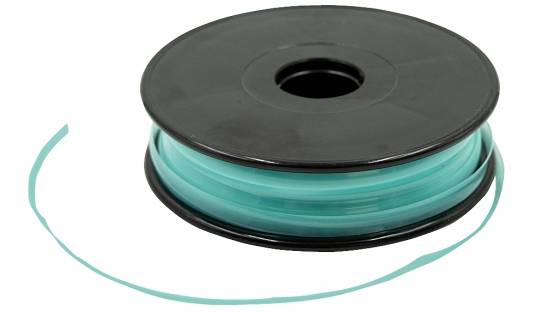
BirdBlocker is a solution specifically designed to protect photovoltaic installations against birds entering underneath the panels. It is installed around the perimeter of the panels using clips, without drilling into the frame, creating a discreet barrier that prevents birds from accessing the space underneath.
You can view the product here: BirdBlocker for solar panels
You can also view the full category of solar panel bird control solutions here: Bird deterrents for solar panels
Why pigeons nest underneath solar panels
Photovoltaic installations create a very attractive space for pigeons and other birds. The gap between the panels and the roof offers shelter from rain, wind, direct sunlight and some predators.
The problem is that once birds start using this area, they can cause significant damage and nuisance:
- accumulation of droppings;
- nests underneath the panels;
- feathers, branches and dirt;
- partial obstruction of ventilation;
- risk of damage to wiring;
- stains on the roof, gutters or façade;
- loss of performance if dirt reaches the surface of the panel;
- recurring cleaning and maintenance costs.
That is why, when the problem is underneath the panels, trying to scare the birds away is not enough. The important thing is to physically prevent them from getting in.
What is an anti-pigeon mesh for solar panels?
An anti-pigeon mesh for solar panels is a physical barrier installed around the perimeter of a photovoltaic installation to close the gap between the panels and the roof.
Its purpose is simple: to prevent pigeons, sparrows and other birds from getting underneath the panels to shelter or build nests.
These meshes can be made from different materials, usually metal, PVC, polypropylene or other outdoor-resistant plastic materials. They can also vary significantly in quality, rigidity, fixing system and finish.
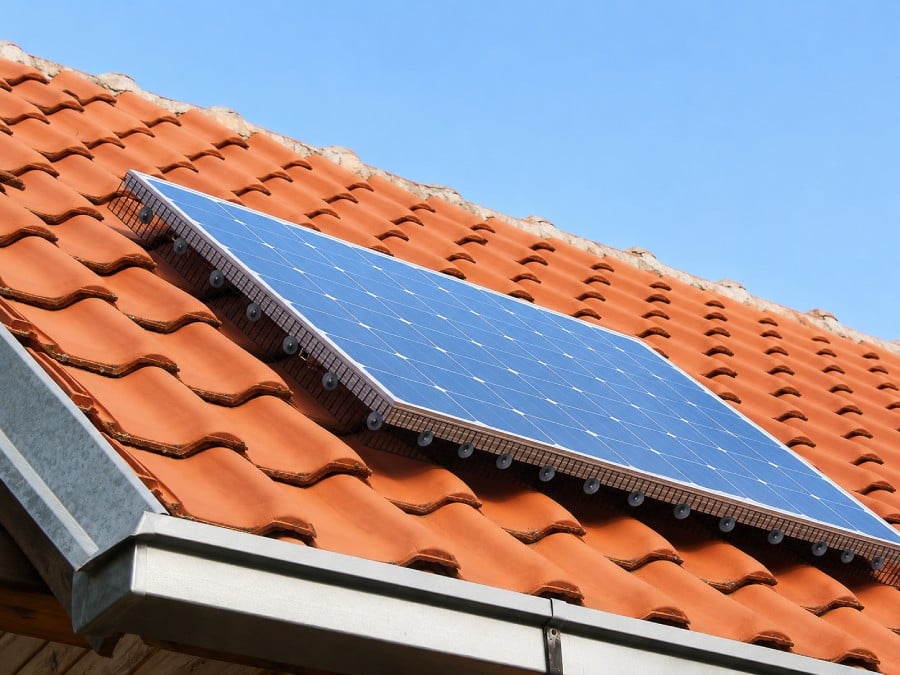
A generic mesh can work if it meets three conditions:
- it closes the entire perimeter properly;
- it is fixed without damaging the photovoltaic installation;
- it withstands sunlight, rain and the passage of time.
The problem is that not all generic meshes are designed specifically for solar panels. Some solutions may fit poorly, be too visible, accumulate dirt or require unsuitable fixing systems.
What is BirdBlocker?
BirdBlocker is a bird deterrent system specifically designed to protect solar panels from bird nests.
Unlike a generic mesh, BirdBlocker is designed to be installed around the perimeter of solar panels and block access to the space underneath, while still maintaining the necessary ventilation below the installation.
BirdBlocker uses outdoor-resistant strips that are fixed to the panel frame using clips. This allows it to be installed without drilling into the panel, without screwing into the structure and without using aggressive fixing systems.
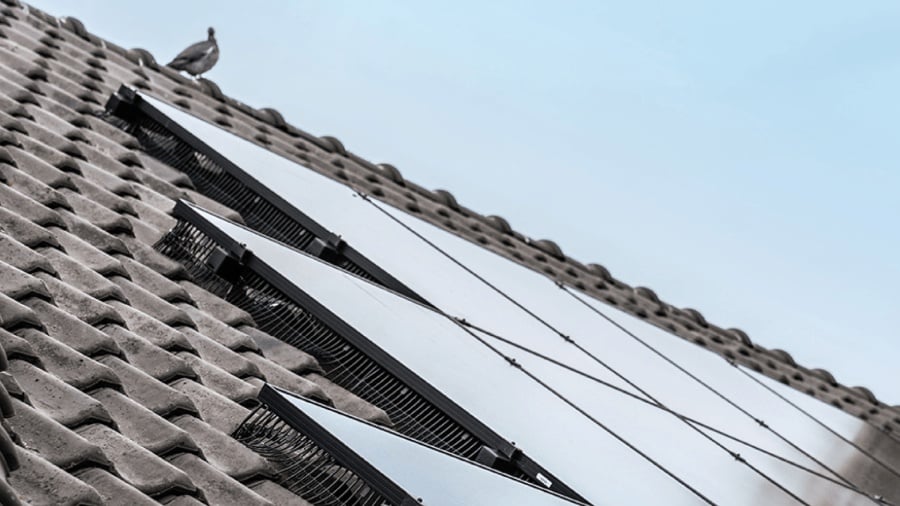
Its purpose is not to scare birds away, but to prevent them from getting in. This difference is important: pigeons can become used to many visual or sound stimuli, but they cannot get through a properly installed physical barrier.
You can view all product information, available models, installation videos and technical details here: BirdBlocker system to protect solar panels
Why buy BirdBlocker from BirdGard Iberia?
BirdGard Iberia is an authorized distributor of BirdBlocker and offers other professional bird control solutions for solar panels, roofs and industrial rooftops. Our value is not only in offering the product, but also in helping customers choose the right solution according to their installation: the height of the gap under the panel, the metres required, the type of roof, previous presence of nests and the level of infestation.
We also offer stock availability, fast delivery, specialist advice before purchase and after-sales support to help resolve installation or use-related questions.
Choosing the right product is important in a solar panel installation. That is why BirdGard Iberia can guide customers before placing an order, especially when there are doubts about the required length, the most suitable height or whether the area should be cleaned before installation.
BirdBlocker vs anti-pigeon mesh: general comparison
| Aspect | BirdBlocker | Generic anti-pigeon mesh |
|---|---|---|
| Main use | Blocking access underneath solar panels | Blocking gaps or perimeters against birds |
| Specific design for solar panels | Yes | Depends on the model |
| Installation | With clips, without drilling into the panel | Depends on the system used |
| Appearance | Very discreet | Variable; some meshes are more visible |
| Ventilation below the panel | Maintains lower ventilation | Depends on the mesh and installation |
| Durability | High, outdoor-resistant material | Highly variable depending on material and quality |
| Risk of incorrect installation | Low if instructions are followed | Higher if unsuitable fixings are used |
| Protection against nests | Very high if installed correctly | High if the full perimeter is closed |
| Price | Higher than some generic meshes | Usually cheaper |
| Best for | Installations where a professional, discreet and specific solution is required | Tighter budgets or installations where a quality mesh is properly installed |
Differences in installation
Installation is one of the most important differences between BirdBlocker and a generic mesh.
BirdBlocker installation
BirdBlocker is installed on the edge of the solar panels using fixing clips. There is no need to drill into the panel or modify its structure.
This is important because many solar panel manufacturers may object if the frame is drilled, screwed into or modified. For this reason, in photovoltaic installations it is advisable to avoid solutions that rely on drilling or aggressive fixings.
BirdBlocker is designed precisely for this type of installation: creating a physical barrier without altering the panel.
Generic mesh installation
A generic mesh can be installed well or badly. That is the critical point.
If it is installed with suitable clips, correctly closing the perimeter and without drilling into the panels, it can be an effective solution. However, if it is fixed with screws, unsuitable cable ties, weak adhesives or improvised systems, it may cause problems:
- loss of tension over time;
- gaps through which birds can still enter;
- accumulation of leaves and dirt;
- poorer visual finish;
- possible damage to the frame or installation;
- risk of affecting the warranty if parts of the panel are drilled.
That is why, when using a generic mesh, the quality of the installation is almost as important as the quality of the material.
Differences in durability
Durability depends on the material, exposure to sunlight and how the barrier has been installed.
BirdBlocker is manufactured for outdoor use and photovoltaic installations. It is designed to withstand UV radiation, rain, temperature changes and long-term exposure on roofs.
In the case of generic meshes, durability can vary greatly. A galvanized metal mesh or stainless-steel mesh can last for many years, but a low-quality plastic mesh can become brittle in the sun, deform or lose strength.
On solar panels, a cheap solution can become expensive if it starts to break, come loose or leave gaps after a short time. When this happens, birds can get back in and the customer has to pay again for cleaning, repair or reinstallation.
Differences in safety for solar panels
In a photovoltaic installation, preventing pigeons is not the only important factor. The solar system itself also needs to be protected.
A good anti-pigeon barrier must meet several criteria:
- not drilling into the panel frame;
- not blocking lower ventilation;
- not pressing cables or connectors;
- not creating areas where excessive dirt accumulates;
- not casting shadows on the panel surface;
- not interfering with installation maintenance.
BirdBlocker is designed with these points in mind. Its function is to close access to the lower gap without blocking the necessary ventilation underneath the panels.
By contrast, a poorly installed generic mesh can cause problems if it is too tight, if it deforms, if it accumulates leaves or if it is installed in a way that interferes with the panel structure.
What about anti-pigeon spikes?
Spikes can be useful on cornices, ledges, edges, signs, beams or specific areas where birds perch.
But they are not the best solution to prevent pigeons from nesting underneath solar panels.
The reason is simple: spikes do not close the gap underneath the panels. They can make it harder for birds to perch on a specific point, but they do not block the entire perimeter of the installation. If there is a free gap, pigeons may find a way in.
In addition, spikes can present several drawbacks on solar panels:
- they do not fully prevent access underneath the panels;
- they can accumulate branches, leaves and dirt;
- they can look unattractive;
- they can deform or come loose;
- they may not be suitable for all edges;
- if installed incorrectly, they can interfere with the installation.
Plastic spikes vs metal spikes
Metal spikes are usually more resistant than low-quality plastic spikes, especially outdoors. However, the main problem is not only the material. The problem is that even metal spikes are not designed to close the gap underneath solar panels.
That is why, for solar panels, spikes should be considered a specific complement for perching areas, not the main solution to prevent nests underneath the panels.
Do ultrasonic devices work for solar panels?
Ultrasonic devices can be useful against some animals in certain spaces, but they are not the main solution to prevent pigeons from nesting underneath solar panels.
Pigeons are very persistent birds once they find a protected place to shelter or breed. If they have already identified the gap underneath the panels as a safe place, the most effective solution is to physically block access.
That is why, in this case, the priority should be a barrier such as BirdBlocker or a properly installed anti-pigeon mesh.
Do owls, falcons or visual bird deterrents work?
Visual bird deterrents can help in some cases, especially as a complement. However, when birds are already getting underneath solar panels, a visual stimulus rarely solves the root of the problem.
Pigeons can become used to static figures or repetitive stimuli. In addition, if the shelter underneath the panels offers protection, shade and safety, they will tend to return.
For this specific case, the main solution should be physical: closing access to the gap.
When a cheap solution can become expensive
Choosing the cheapest option may seem reasonable at first, but on solar panels it is important to consider the total cost of the problem.
A poorly chosen or poorly installed solution can lead birds to return within a few weeks or months. In that case, the real cost is not only the initial product, but also:
- new roof cleaning;
- nest removal;
- replacement of damaged parts;
- new barrier installation;
- possible wiring problems;
- wasted time;
- recurring nuisance.
That is why, if the problem is serious or there are already nests underneath the panels, it is advisable to choose a specific and durable solution from the beginning.
BirdBlocker is usually more expensive than some generic meshes, but it offers an important advantage: it is specifically designed for this use and reduces the risk of improvised installation.
When to choose BirdBlocker
BirdBlocker is especially recommended when:
- pigeons are getting underneath the solar panels;
- there have already been nests underneath the panels;
- a discreet and professional solution is required;
- you want to avoid drilling into the panels;
- you want to maintain lower ventilation;
- you want a solution specifically designed for photovoltaic systems;
- you want to reduce future maintenance;
- the installation is recent and the panel warranty is a concern.
In these cases, BirdBlocker is usually the most complete option.
More product information: BirdBlocker, a specific solution for solar panels.
When a generic anti-pigeon mesh may be suitable
A generic mesh can be a valid alternative if:
- it is good quality;
- it withstands outdoor conditions well;
- it is installed with suitable clips or fixings;
- the panels are not drilled;
- the entire perimeter is properly closed;
- it does not affect ventilation;
- visual finish is not such an important priority;
- the budget is tighter.
The key is to avoid improvised installations. A poorly installed mesh can leave gaps, accumulate dirt or deteriorate too quickly.
When to call an installer
Although some solutions can be installed relatively easily, there are cases where it is advisable to use a professional installer:
- sloped or difficult-to-access roofs;
- installations at height;
- slippery or fragile roofs;
- presence of many nests or droppings;
- large solar installations;
- doubts about panel warranty;
- need to clean before installation;
- presence of exposed wiring or delicate areas.
Before installing any anti-pigeon system, it is important to remove nests, feathers, branches and droppings. Birds tend to return to areas where they have already nested. Cleaning the area properly helps prevent them from continuing to identify it as their own place.
If you have doubts about how many metres you need, which height to choose or whether your installation requires cleaning beforehand, you can contact BirdGard Iberia before placing your order. We regularly deal with cases of pigeons under solar panels in homes, residential communities, warehouses and industrial roofs, and we can advise you on the most suitable solution for your case.
BirdGard Iberia: experience in bird deterrent solutions for solar panels
At BirdGard Iberia we specialize in solutions for the control of birds and other unwanted animals. We work with physical, visual, bioacoustic and exclusion products to help solve problems on roofs, solar panels, warehouses, industrial roofs, boats, crops, livestock facilities and private homes.
In the specific case of solar panels, experience shows that when birds access the lower gap beneath the panels, the most reliable solution is usually a physical perimeter barrier. That is why we recommend BirdBlocker as one of the most specific solutions for this problem.
In addition to selling the product, we offer pre-purchase advice, regular stock availability, fast delivery and after-sales support to help ensure the installation is carried out correctly. Our goal is not only for the customer to buy an anti-pigeon barrier, but to choose a suitable solution for their roof, solar panels and the real level of the problem.
Summary table: BirdBlocker, mesh and spikes
| Solution | Effectiveness against nests under panels | Appearance | Durability | Installation | Recommendation |
|---|---|---|---|---|---|
| BirdBlocker | Very high | Very discreet | High | With clips, without drilling | Best general option for solar panels |
| Generic anti-pigeon mesh | High if properly installed | Variable | Variable depending on material | Depends on the system | Good alternative if quality material and proper installation are used |
| Spikes | Low to medium | Not very discreet | Medium | Easy, but limited | Only as a complement in perching areas |
| Ultrasonic devices | Low for this specific case | Discreet | Variable | Easy | Not recommended as the main solution under panels |
| Visual bird deterrents | Low to medium | Variable | Variable | Easy | Complementary solution, not the main solution |
Final recommendation
If the problem is that pigeons or other birds are getting underneath solar panels, the best solution is usually a physical perimeter barrier.
Among the available options, BirdBlocker stands out because it is specifically designed for solar panels: it blocks access to the gap underneath the panels, installs with clips without drilling, maintains lower ventilation and offers a discreet finish.
A generic anti-pigeon mesh can also work if it is good quality and properly installed. However, because it is not always designed for photovoltaic systems, it can depend heavily on the installer, the material and the fixing system used.
Spikes, ultrasonic devices and visual bird deterrents can have their place in other contexts, but they should not be the first option when the goal is to prevent nests underneath solar panels.
To protect solar panels against bird nests, you can view BirdBlocker here: BirdBlocker bird deterrent for solar panels
And the full category of bird deterrent solutions for solar panels here: bird deterrent solutions for solar panels
Frequently asked questions
What is best for solar panels: BirdBlocker, mesh or spikes?
To prevent pigeons from getting underneath solar panels, the most recommended options are BirdBlocker or a properly installed anti-pigeon mesh. Spikes can help in perching areas, but they do not close the lower gap beneath the panels and do not usually solve the nesting problem.
Is BirdBlocker an anti-pigeon mesh?
BirdBlocker is a physical barrier specifically designed for solar panels. Its function is similar to that of an anti-pigeon mesh because it blocks bird access, but it is specifically designed to be installed around the perimeter of solar panels using clips.
Can a generic mesh protect solar panels?
It can work if it is resistant, properly installed and does not damage the panels. The problem is that some generic meshes are not designed for photovoltaic systems and may fit poorly, accumulate dirt or require unsuitable fixings.
Do spikes prevent pigeons from getting underneath solar panels?
They are not usually the best solution. Spikes can prevent birds from perching in specific areas, but they do not completely block access to the gap underneath the panels. That is why, to prevent nests, a physical perimeter barrier is a better option.
Do ultrasonic devices work to repel pigeons from solar panels?
They should not be considered the main solution for this case. If pigeons are getting underneath the panels, the most effective approach is to physically prevent access with BirdBlocker or a suitable mesh.
Can BirdBlocker be installed without drilling into solar panels?
Yes. BirdBlocker is installed using fixing clips, without drilling into the solar panel frame. This helps avoid aggressive modifications to the installation.
Does BirdBlocker maintain ventilation under the panels?
Yes. BirdBlocker is designed to block bird access to the gap underneath the panels without completely closing off the lower ventilation required for the photovoltaic installation.
Should the area be cleaned before installing BirdBlocker or an anti-pigeon mesh?
Yes. It is highly recommended to clean the area before installing any barrier. Nests, feathers, branches and droppings should be removed so birds do not continue to identify that space as their own area.
When should I call an installer?
You should call an installer if the roof is sloped, access is difficult, the installation is at height, there are many nests or there are doubts about the panel warranty. It is also recommended for large or complex installations.
Why buy BirdBlocker from BirdGard Iberia?
BirdGard Iberia specializes in bird control solutions and is an authorized distributor of BirdBlocker, with stock availability, fast delivery, specialist pre-purchase advice and after-sales support. We can also advise customers on the most suitable height, length and installation according to their case.
Where can I buy BirdBlocker?
You can view all information about BirdBlocker, available models, installation videos and technical details in the BirdGard Iberia online store: