Bird problems on roofs are not always solved in the same way. You do not need the same solution for a house roof, an industrial roof, a solar panel installation or a TV aerial where birds perch every day.
The key is to identify what type of surface you are dealing with, which birds are causing the problem and how they are using the area. On large roofs, sound bird deterrents with the right coverage usually work best. On solar panels, the most effective solution is usually to physically block access underneath the panels. And in very specific spots, such as TV aerials or other highly localised perching areas, there are more targeted solutions.
In this guide, we explain which solution is best suited to each situation, with real examples and a clear comparison table to help you find the right fit quickly.
Quick comparison table: which solution is best for each case?
If you want a quick overview, this table summarises which bird control solution is usually the best fit depending on the type of roof.
| Case | Approximate surface area | Main problem | Recommended solution | When it fits best |
|---|---|---|---|---|
| Very large roofs | Large open areas | Seagulls, pigeons or other birds using the roof on a continuous basis | BirdGard Super Pro Amp | When you need maximum coverage |
| Medium-sized roofs | Up to approx. 6,000 m² | Repeated perching and mess on the roof | BirdGard Pro | When a well-positioned base unit may be enough |
| Dual-pitch roofs | Up to approx. 12,000 m² | Greater roof spread or the need to distribute coverage more effectively | BirdGard Pro Plus | When BirdGard Pro may not provide enough coverage |
| Four-pitch or larger roofs | Up to approx. 24,000 m² | Several roof orientations or different areas to protect | BirdGard Super Pro or BroadBand Pro | When it makes sense to dedicate one speaker to each area |
| Residential roofs | Up to approx. 400 m² | Pigeons, seagulls or sparrows perching and making a mess | WK0109 | When the problem affects a house roof |
| Roofs with solar panels | Variable surface area | Birds nesting under the panels | BirdBlocker | When the problem is underneath the panels, not on top of them |
| Birds perching on a TV aerial | Very localised point | Repeated perching on the aerial and mess on the roof or terrace | Bird Repeller for TV Aerials | When the problem clearly centres on the aerial |
Below, we look at each case in more detail and link to real examples.
Which birds usually cause the biggest problems on roofs?
Although different species can appear on roofs, the ones that usually cause the most trouble are pigeons, sparrows and seagulls.
- Pigeons are especially persistent and tend to return to the same perching points again and again.
- Sparrows can also cause a lot of problems, especially when they find quiet areas where they can settle or move in and out easily.
- Seagulls create very visible issues on large roofs, especially because of the mess, noise and repeated use of the surface.
In all these cases, it is important to choose a solution that matches the setting. A large open roof used by birds across the whole surface is not the same as a house roof where the problem is concentrated in one specific spot.
The best solution depends on the type of roof and how birds are using it
A residential roof where birds perch in very specific spots is not the same as a large industrial roof used as a regular place to pass through, rest or gather.
Likewise, a solar panel installation, where the main problem is usually birds getting underneath the panels to nest, is not the same as a TV aerial where the issue is highly localised.
That is why, before choosing a solution, it helps to ask three very simple questions:
- How large is the area you want to protect?
- Which birds are causing the problem?
- Where exactly is the activity concentrated: across the whole roof, in one specific spot, or underneath solar panels installed on the roof?
Answering these questions properly helps you avoid unnecessary trial and error and makes it much easier to choose the right solution from the start.
Recommended solutions depending on the type of roof
Very large roofs: when the problem affects a large open area
When we talk about very large roofs, the first criterion is effective coverage. In these cases, choosing a unit that falls short is usually the biggest mistake, because the problem is not limited to one isolated point. Instead, birds are using a large area over and over again.
For this type of situation, the most suitable option is the BirdGard Super Pro Amp, a unit designed for large-scale applications with coverage of up to 12 hectares.
When it fits best:
- large industrial roofs,
- open surfaces with continuous pressure from seagulls or pigeons,
- environments where the problem is already recurring and well established.
On this type of roof, the goal is not just to scare birds away, but to do so with a system that matches the real scale of the problem.
Recommended case study:
How to Repel Seagulls from Rooftops
Medium-sized roofs: when the area is significant, but not massive
On medium-sized roofs, you often do not need to move up to the largest systems. If the area is properly sized and the problem is clear, a well-installed BirdGard Pro can be a very effective solution.
When it fits best:
- roofs of less than approx. 6,000 m²,
- medium-sized warehouses or roof areas,
- cases where the problem is more or less concentrated and does not require a larger setup.
Recommended case study:
How to Get Rid of Seagulls Using BirdGard Bioacustic Repellers
Roofs of up to 12,000 m² or dual-pitch roofs
Some roofs, without being huge, already require a step up from the base model. This is the case with somewhat larger roof areas, roofs with more linear spread, or dual-pitch configurations where it makes sense to distribute coverage more effectively.
This is where the BirdGard Pro Plus comes in.
When it fits best:
- when BirdGard Pro may not provide enough coverage,
- when it helps to spread pressure more evenly across the roof,
- when the roof layout makes wider coverage advisable.
Roofs of up to 24,000 m² or four-pitch roofs
When a roof has several orientations or a more complex layout, as is often the case with four-pitch roofs, it makes sense to use solutions that allow one output or one speaker to be dedicated to each area.
This is where systems such as the BirdGard Super Pro or the BroadBand Pro come in, depending on the case and the specific roof layout.
When it fits best:
- large roofs with several orientations,
- surfaces where coverage needs to be distributed by zone,
- cases where a single output point is not enough.
Residential roofs: when the problem affects a house roof
On house roofs, the problem is usually very different from what you see on an industrial roof. Here, you are not always dealing with one large continuous surface, but with a roof where pigeons, seagulls or sparrows keep perching, making a mess and coming back again and again.
For this kind of case, a solution such as WK0109 can work very well, especially when the aim is to protect a residential setting without making the installation too complicated.
When it fits best:
- pigeons on roofs,
- sparrows on a roof or on a roof area close to a house,
- birds coming in to drink or repeatedly using the area.
Customer reviews of this product tend to highlight the same points: a quick drop in the number of pigeons, visible improvement on roofs and in areas near swimming pools, and good results against sparrows in residential settings as well.
In addition, when dealing with pigeons and sparrows, reinforcing the solution with a Hawk ScareCrow – Eolo can be a very good idea. The combined effect improves the overall effectiveness of the solution: birds hear predator sounds while also seeing a visual threat in the area.
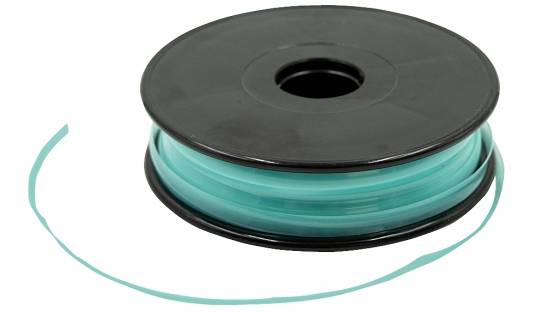
Roofs with solar panels: when the problem is under the panels
When there are solar panels on the roof, the problem is not usually just birds perching on top. In many cases, the real issue is that birds get underneath and nest below the panels, creating nests, mess, noise and possible damage to the installation.
In this case, the most effective solution is not usually a one-off bird deterrent, but rather physically blocking access to the gap under the panels. That is exactly the logic behind BirdBlocker.
When it fits best:
- if there is already bird activity under the panels,
- if there is mess, noise or signs of nesting,
- if you want to prevent the problem before it becomes established.
Once birds have already nested there, dealing with the problem is usually more complicated, more expensive and, in many cases, more limited. That is why, in photovoltaic installations, preventing access from the beginning is usually the most effective approach.
Related article:
Bird Control in Solar Panels and Photovoltaics
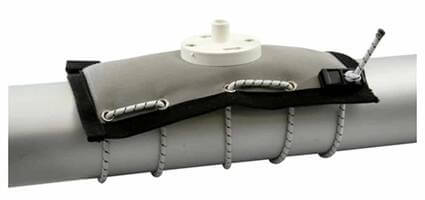
Birds perching on the TV aerial and dirtying the roof
In many residential cases, the problem is not spread across the whole roof but concentrated in one very specific point: the TV aerial. When birds perch there regularly, they end up dirtying not only the aerial itself, but also the roof, the terrace or the areas below.
In these cases, it does not make sense to use a large-coverage solution. What does make sense is a targeted solution that stops birds from landing on that exact spot. That is where the Bird Repeller for TV Aerials fits in.
When it fits best:
- TV aerials or similar structures,
- constant mess directly below that point,
- daily repeated perching.
Customer reviews of this product repeatedly highlight the same benefits: much cleaner patios and terraces, birds stopping perching on the aerial straight away, and clear satisfaction in homes where other solutions had already been tried without success.
Related article:
How to Prevent Birds from Perching on Antennas
Which solutions we do not recommend for large roofs
Why ultrasonic devices are not the best option for large roofs or wide roof areas
Ultrasonic devices are not the solution we usually recommend for large roofs. The reason is simple: their coverage is limited and they are not usually the right answer when the problem affects wide surfaces or entire roof areas.
For example, UltraSonX can make sense in specific situations, but not as the main solution for large roofs.
They can make sense in very specific cases, especially as a preventive measure to stop species with high hearing sensitivity, such as swallows or bats, from returning to nest in the area. In any case, it is important to remember that both swallows and bats are protected species, so any action must be approached with particular caution and always within the applicable legal framework.
Put simply: for large roofs, ultrasonic devices are usually not the right way to go. For large surfaces, what matters is having the right coverage and using a solution designed for that kind of scenario.
Common mistakes when trying to repel birds from roofs
Choosing a solution with insufficient coverage
One of the most common mistakes is trying to protect a large surface with a system designed for a much smaller area.
Treating a residential roof the same way as an industrial roof
A house roof with pigeons or sparrows is not the same as a large open roof used by seagulls on a regular basis.
Not cleaning the area before installing the solution
Before installing a bird deterrent, it is advisable to clean away droppings, feathers and nest remains so that birds no longer feel the area belongs to them. This can significantly improve the effectiveness of the solution.
Waiting too long and only acting once the problem is well established
When birds have already been using the same spot for weeks or months, breaking that habit is usually more difficult and the solution requires more effort.
Relying on a single solution for pigeons or sparrows
When it comes to repelling pigeons or sparrows, one of the most common mistakes is relying on a single solution, such as a sound deterrent designed for that species. These birds are very stubborn and difficult to repel, so while a sound system can help a lot, in many cases it is more effective to reinforce it with a visual deterrent such as the Hawk ScareCrow – Eolo. The combined effect of both devices creates a synergistic effect that improves the overall effectiveness of the solution: on the one hand, birds hear predator sounds and, on the other, they see a visual threat in the area.
Frequently asked questions
What solution do I need to repel birds from a large roof?
It mainly depends on the total size of the area and on the bird species involved, but on large roofs, sound bird deterrents with the right coverage are usually the most suitable option.
Which birds cause the most problems on roofs?
The most common ones are usually pigeons, sparrows and seagulls, although the type of problem varies quite a lot depending on the species and the setting.
What is the difference between BirdGard Pro, Pro Plus, Super Pro and Super Pro Amp?
The main difference is coverage.
What should I do if pigeons are perching on my roof?
The first step is to identify whether they are only perching on top or whether they are also nesting in a specific spot, for example underneath solar panels. From there, the most suitable solution can change significantly.
What should I do if the problem is sparrows on the roof?
Sparrows can be especially persistent. It is very difficult to repel them completely, but there are tools that can help minimise the problem and keep it under control.
Do ultrasonic devices work for large roofs?
In general, no. It is not the solution we recommend at BirdGard Iberia for large roofs.
Which solution is best if the problem is in solar panels?
When birds are nesting under the panels, the most effective solution is usually to physically block access, rather than relying on a one-off bird deterrent.
What happens if seagulls are in breeding season?
During breeding season, seagulls can become very aggressive as they protect their chicks. In those cases, it is advisable to wait until the chicks are able to leave the nest before installing bird deterrents.
Content produced by BirdGard Iberia
Since 2008, BirdGard Iberia has been providing bird control solutions for residential, industrial, agricultural and commercial settings, with experience in cases involving roofs, solar panel installations, TV aerials and large outdoor areas.
Conclusion: the right solution depends on the case, not on a one-size-fits-all approach
When there are birds on a roof, the real question is not which product is “best” in the abstract, but which solution is the best fit for that specific situation.
You do not need the same solution for a 75,000 m² roof, a medium-sized warehouse, a residential roof with pigeons, a solar panel installation or a TV aerial where birds perch every day.
If you start from that logic, it becomes much easier to choose the right solution and avoid unnecessary trial and error.
If you want a better overview, you can explore these related solutions: